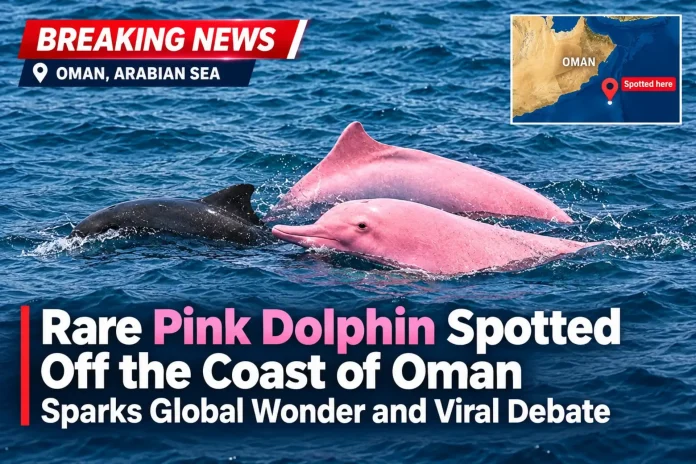
A pale, pink-tinged dolphin swimming near Qantab Beach outside Muscat, Oman, has become an unexpected viral sensation this week after footage of the animal surfaced online and spread rapidly across X and Instagram.
The clips, first shared by local outlet Arabian Daily around October 15, show the light-colored dolphin moving through the water close to shore alongside darker members of its pod. Beachgoers filmed the encounter from the sand, and the videos quickly traveled far beyond Oman. By October 21, the sighting was drawing widespread attention for the simple reason that pink dolphins are not something most people expect to see in the Gulf of Oman.
What the animal actually is remains unclear. Marine specialists have not confirmed the species. Color alone does not identify a dolphin, and the available footage is too distant for definitive analysis. Abbas Al Zadjali, writing in the Omani newspaper Al Shabiba, suggested the animals in the original video more closely resemble Risso’s dolphins based on their rounded heads and dorsal fins. He noted that Risso’s dolphins can turn pale or nearly white with age as scars accumulate, and he cautioned that some versions of the viral clips appear to mix in separate footage of pink humpback dolphins filmed in Thailand.
Other observers have pointed toward Indo-Pacific or Indian Ocean humpback dolphins, a coastal species known in the region. Adults of these dolphins can lighten significantly as they mature, and their skin can take on a pinkish flush when blood vessels near the surface dilate during activity. Both possibilities are plausible in Omani waters, where both species have been documented, but neither has been verified. These are not Amazon River dolphins, the freshwater animals most people picture when they hear “pink dolphin.” Those live only in South American river systems.
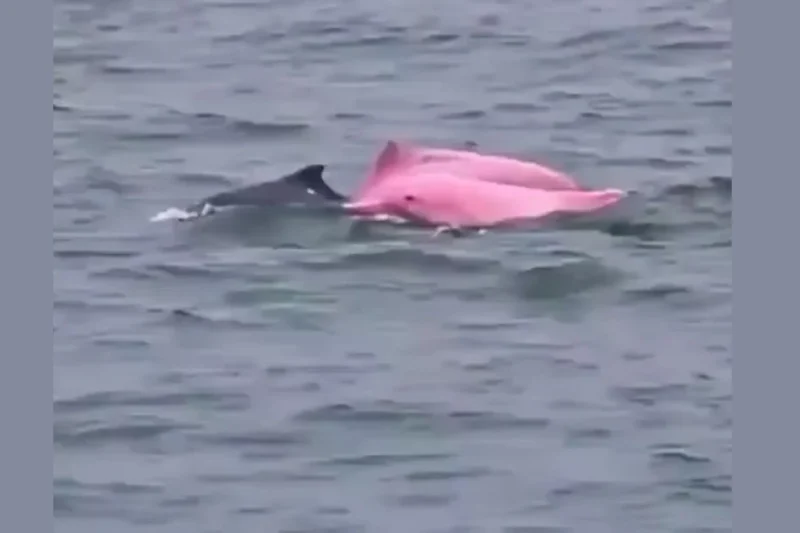
The online reaction has been largely one of surprise and delight. Large accounts amplified the footage, and the clips accumulated thousands of likes and reposts within days. Many commenters initially assumed they were looking at an Amazon river dolphin before realizing the location made that impossible. Others debated whether the color had been enhanced or whether the videos were AI-generated. The original beach footage appears authentic, though the speed of sharing has led to mixed and upscaled versions circulating alongside it.
Oman’s coastline already supports a wide range of cetaceans, including spinner, bottlenose, and common dolphins that are regularly seen on local tours, along with Risso’s and humpback dolphins. The Muscat area and its nearby coastal canyons are recognized for this diversity. The recent sighting has simply made that reality more visible to a global audience than usual.
For now, the animals are best described as pale, pinkish-looking dolphins whose exact species and the reason for their coloration have not been confirmed. The footage has turned an ordinary beach day in Muscat into a brief global curiosity, the kind of unexpected wildlife moment that travels quickly because it looks almost too striking to be real.