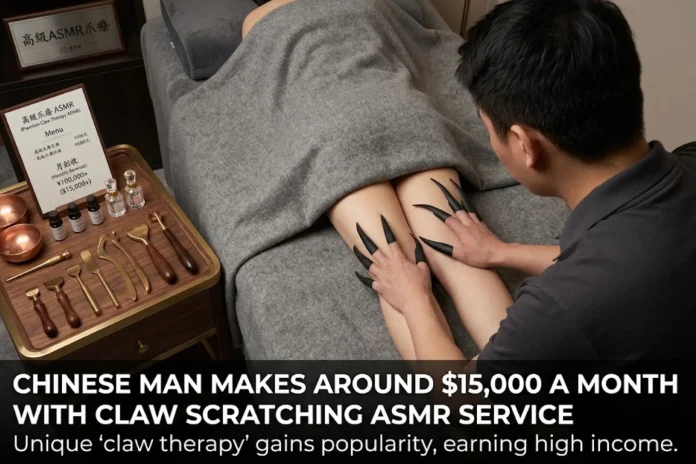
A 32-year-old entrepreneur in Shenzhen has built a profitable business by offering professional itch-scratching services, with his two salons generating roughly 100,000 yuan, or about $15,000, in monthly gross revenue.
Zhang Xiaoqiao, originally from Hubei province, opened his first outlet under the brand Suma in Shenzhen’s Baoan District in early May 2026. A second location followed about a month later in the city’s Futian District. Staff wear specially designed pointed artificial nails to gently scratch customers’ backs, legs, necks, arms and other areas while clients lie face-down on beds in a setting similar to a massage parlor.
A one-hour session costs around 300 yuan, or about $40. The most popular offering is an 80-minute full-body “sleep aid” package priced at 289 to 299 yuan. Zhang has said the service aims to relieve stress and improve sleep quality in China’s high-pressure first-tier cities. Many customers fall asleep during sessions, and some report it feels more relaxing than a traditional massage.
“In first-tier cities, people generally experience high levels of stress. As a result, this service is in great demand,” Zhang told media outlets. Men make up about 70 percent of the clientele, though both men and women visit the salons. Returning customers form a strong base of business.
Zhang developed the techniques himself over roughly four months after finding no existing model for the service in China. He divided the body into five major itch zones and more than 30 smaller ones, varying the pressure by area. He tested methods on friends and online followers before opening. Staff sometimes use 3D-printed nail covers in different colors and shapes, including more elaborate designs, for varied sensations.
The idea took shape after Zhang saw a short social media video of a woman scratching her husband’s back. Viewers commented that they would pay for the same relief. The clip reminded him of childhood nights when his father scratched his back until he fell asleep. Some accounts also note that a moment when his wife scratched him helped spark the concept. Before this venture, Zhang had tried self-media work and two earlier businesses that ultimately closed. He has described job-hopping through multiple roles early in his career.
According to figures Zhang shared with Chinese media, one store’s August revenue reached about 160,000 yuan when combining platform bookings and in-store payments, with daily sales rarely falling below 5,000 yuan. Scratching accounts for more than 70 percent of revenue; the shops also offer ear cleaning and conventional massage. Both locations have recovered their initial investment and begun turning a profit within months of opening.
Zhang has said he plans to expand significantly, with a third Shenzhen store already in preparation and a longer-term goal of building a network of 100 outlets. He has also begun offering limited training and franchise opportunities, mainly to existing offline operators, while positioning professional scratching as a legitimate relaxation service rather than anything else.
Reports on the business first circulated widely in Chinese media in late August 2026 and later appeared in international outlets including the South China Morning Post.