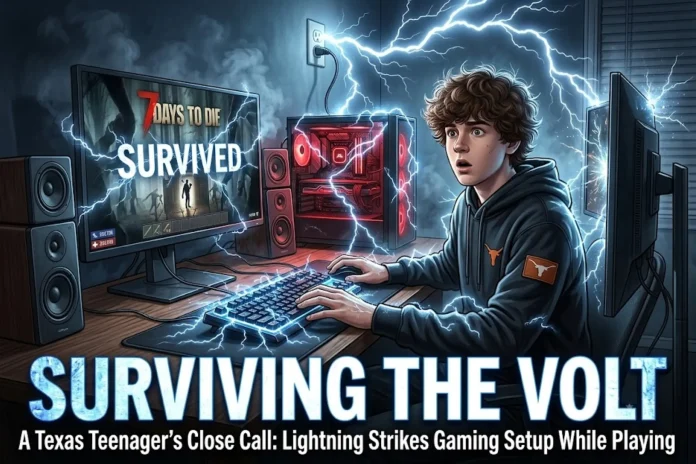
On July 7, 2026, 13-year-old Vlad Skuridin survived a direct lightning strike inside his family’s two-story home in the Houston suburb of Cypress, Texas, according to ABC13 Houston’s reporting from KTRK. The teen was sitting at his desk in his bedroom at the residence in the 14400 block of Cypress View Drive, playing games on his computer, when a thunderstorm moved through the area and the bolt hit the property. The lightning struck both the roof and a nearby tree before the energy followed the home’s electrical system indoors, an outcome that insurance representatives later confirmed to the family on site.
Key facts from the incident:
- Date: Tuesday, July 7, 2026
- Location: 14400 block of Cypress View Drive, Cypress, Texas (Harris County)
- Victim: Vlad Skuridin, age 13
- Activity at time of strike: Playing video games at his computer desk
- Point of contact: Metal frame of the computer desk, against bare skin on his abdomen
- Property damage: Small attic fire, hole blown through one interior wall, gas and water lines affected
- Outcome: Evaluated on scene; no hospital transport required; recovering at home
Electricity traveled through the home’s wiring and reached the metal part of Skuridin’s computer desk that sat in direct contact with the skin on his abdomen. He felt an immediate jolt, saw a bright white flash, and was thrown backward from his chair. The surge also sparked a small fire in the attic and blew a hole through one interior wall. Family members later reported additional effects on gas and water lines inside the home.
Skuridin described the moment clearly in the hours afterward. He said he had been sitting comfortably playing games with no warning when everything changed in an instant. The shock caused him to jump up immediately and start screaming as pain registered in his midsection. In comments to ABC13, he added that he knew the danger existed but never expected it to happen to him, calling the event “one in a million.” He later told reporters he thought he was going to die and did not expect to survive the experience.
His father heard the screams and called 911 without delay. Emergency crews from the Harris County Precinct 4 Constable’s Office and Cypress Creek Fire Department responded quickly to the residence. Firefighters addressed the small attic fire while emergency medical personnel evaluated the teenager on scene. He received a full assessment but did not require transport to a hospital.
Skuridin is now recovering at home and reports feeling physically fine, though he remains a little shaken and dizzy from the overall event. He has reflected on the experience with a sense of gratitude and perspective, noting that life can change without warning and that people should stay ready for the unexpected. He emphasized the importance of being kind to others because any moment could be the last.
Local authorities used the incident to issue a direct safety reminder to residents. During thunderstorms, people should unplug corded electronics and avoid contact with electrical wiring and plumbing, as lightning can travel through a home’s electrical system even when the strike occurs outside. Surge protectors provide some protection against smaller surges but have clear limits when dealing with the extreme voltage from a nearby lightning strike. University of Houston physics and electrical engineering expert Edgar Bering, interviewed by ABC13, stressed that anything connected to the home’s electrical system can become a source of current during a strike, and recommended moving away from plugged-in devices altogether until the storm passes.
This case highlights how common household activities can become unexpectedly dangerous when severe weather strikes. Modern homes contain extensive conductive paths through wiring, plumbing, and metal fixtures that can channel electrical energy in surprising ways. The teenager’s survival without serious injury demonstrates both the random nature of these events and the critical value of immediate response from family members and trained first responders.
Experts consistently recommend treating any audible thunder as a signal to move indoors and stay away from wired devices until at least 30 minutes after the last thunder is heard. Simple actions such as unplugging gaming setups, computers, and other electronics before storms intensify can significantly reduce risk. The viral incident serves as a clear example of why these precautions matter even when people believe they are already safe inside their homes.
Skuridin’s story has resonated locally because it shows both the danger and the resilience involved. He walked away with no lasting physical injuries and has used his experience to share a message about appreciating life and staying prepared. Emergency officials continue to encourage families to review their storm safety plans and discuss what to do when lightning threatens the area.
For reliable lightning safety guidelines, residents can consult the National Weather Service lightning safety recommendations. Additional practical steps for household preparedness during thunderstorms are available from the American Red Cross. These resources outline clear actions that can help protect families when severe weather develops.