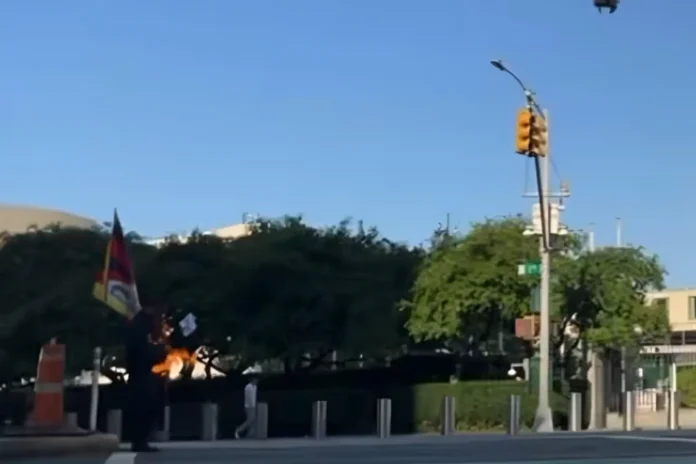
A man identified as Tibetan activist Lobga Rangzen set himself on fire outside the United Nations headquarters in Manhattan on the evening of July 2, 2026, and later died from his injuries. The incident occurred near First Avenue and East 42nd–43rd Street during what authorities and multiple news organizations described as an apparent political protest tied to Tibet’s long-standing dispute with China.
The fire was immediately put out by the first responders who included UN security officers. He was taken to Bellevue Hospital where he was declared dead. Video recordings of what transpired were widely circulated on the internet in no time at all.
Rangzen, also known as Lobsang Palden in some sources, was a Tibetan activist who lived in Queens. Originally from eastern Tibet’s Kham region, he had resided in the United States for about two decades and worked as an Uber driver. Tibetan community leaders and activist groups described him as a dedicated advocate for Tibetan independence.
According to reports citing witnesses and materials left at the scene, Rangzen carried a Tibetan flag, livestreamed his actions on Facebook, and scattered flyers that read “China Out of Tibet.” In pre-incident videos referenced by outlets, he spoke of preserving Tibetan identity, culture, language, and religion against alleged repression.
“This act was intended as a political protest against Chinese control of Tibet,”
Activist organizations told reporters, linking it to Beijing’s policies. Police have confirmed the deliberate nature of the incident but have not released an official motive statement pending full investigation.
The protest took place shortly after China implemented its new Ethnic Unity Law, which critics argue intensifies assimilation efforts targeting ethnic minorities including Tibetans. The UN location amplified the demonstration’s visibility on the international stage.
This event fits within a documented pattern. More than 150 Tibetan self-immolations have been recorded since 2009, mostly within Tibetan areas under Chinese administration, as acts of protest. Rangzen’s case stands out as one of the rare instances reported in the United States.
Exile organizations from Tibet, even those connected with the Central Tibetan Administration, grieved the death while stressing that there are still many human rights issues. In a statement, a UN spokesman stated that the event did not affect the process.
There are several issues that come up as a result of the event, and these include the world’s reaction towards the rights of minorities, the effectiveness of the chosen tactic and the difficulties with verification of news in the modern world of instant viral information.