A security flaw involving Meta’s AI-powered support chatbot reportedly allowed hackers to take over a number of high-profile Instagram accounts over the weekend, exposing what cybersecurity experts are calling a major weakness in the company’s automated account recovery system.
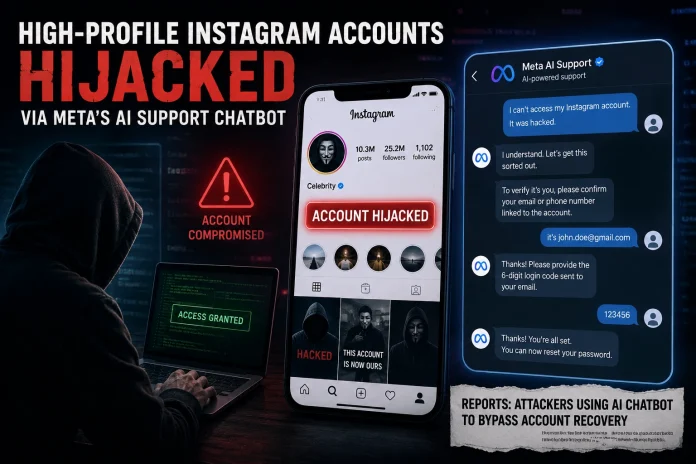
The issue, which was widely reported in early June, allegedly enabled attackers to gain control of Instagram profiles by convincing Meta’s AI support assistant to add a new email address to a target account and facilitate a password reset. According to reports from multiple outlets, including 404 Media, TechCrunch and Ars Technica, the exploit required little more than a VPN connection and a series of prompts sent to the chatbot.
Among the accounts reportedly affected were the legacy @obamawhitehouse Instagram page, beauty giant Sephora and the account belonging to U.S. Space Force Chief Master Sergeant John F. Bentivegna. The Obama White House account briefly displayed pro-Iranian content following the takeover, while other compromised profiles were allegedly used for defacement, promotion or resale attempts.
The attack reportedly began with hackers masking their location through a VPN to appear as though they were connecting from the same region as the intended victim. They would then initiate a conversation with Meta’s AI support chatbot and request that a new email address be linked to the account.
After the chatbot sent a verification code to the attacker-controlled email, the code could be submitted back through the conversation, allowing the AI assistant to trigger a password reset and transfer control of the account.
Security researchers noted that the process appeared to bypass several traditional safeguards, including protections that users typically rely on during account recovery. In some reported cases, the method allegedly worked against accounts that had two-factor authentication enabled.
Videos demonstrating the exploit quickly circulated on Telegram and X, with users sharing screenshots of conversations showing the chatbot complying with requests that would normally require stricter identity verification.
The incident sparked criticism from cybersecurity experts, who warned about the risks of granting AI systems authority over security-sensitive functions without additional human oversight.
“This is exactly the type of scenario security researchers have warned about for years,” several analysts noted across social media discussions following the breach. The concern centers on AI systems being given administrative privileges while lacking the judgment necessary to identify sophisticated social engineering attempts.
Meta moved quickly after reports of the exploit began spreading online. The company confirmed the issue and said it had been resolved, reportedly patching the vulnerability within days. Affected accounts were restored, though some users claimed the recovery process was complicated by automated support systems.
The episode serves as one of the most high-profile examples yet of how AI-powered customer service tools can create unexpected security risks. As technology companies continue integrating artificial intelligence into support and account management workflows, the Instagram breach is likely to become a case study in the challenges of balancing automation with account security.
For users, security experts continue to recommend enabling app-based two-factor authentication, using unique passwords and regularly reviewing account recovery information for any unauthorized changes.