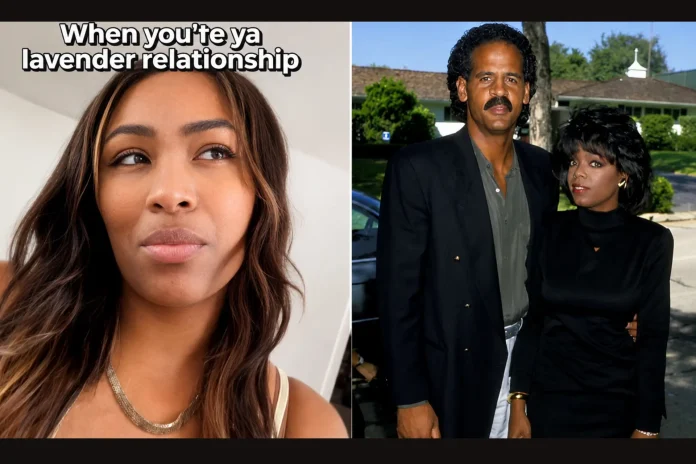
A split-screen video is blowing up on X. On one side, a Black woman with long highlighted hair, full makeup, and a gold necklace delivers epic side-eyes, pursed lips, head tilts, and facepalms. On the other, a man in a black hoodie and skirt-like garment energetically dances and twerks in front of a TV playing Rugrats. Overlay text flashes:
“When you try a lavender relationship.”
The polished right panel shows a seemingly traditional couple a mustached man in a blazer and a woman in black posing outside a house with a car.
Influencer Dom Lucre shared the meme, framing it as evidence that “lavender relationships” are moving from old Hollywood closets into everyday American life. The post sparked heated debates across X, TikTok, and Instagram.
A tweet from X.
A lavender marriage is an expression used in cases whereby a homosexual couple pretends that they have a hetero marriage for their social image purposes. This comes as a result of the lavender connection to homosexuality, which was coined in the 1920s.
In mid-20th century Hollywood, studios enforced morality clauses. Stars like Rock Hudson reportedly entered such arrangements to shield their personal lives from career-ending scandals.
“These marriages were orchestrated by Hollywood studios…to conceal their sexual preference,”
As stated in historical records of the Golden Age.
Fast-forward to 2024–2026: The conversation has exploded online. Hashtag #lavendermarriage has racked up millions of views on TikTok. Creators post “applications” for platonic spouses, joking or seriously seeking partners for shared bills and companionship.
TikToker Robbie Scott went viral in 2024 posting applications for a lavender marriage partner, highlighting financial help and freedom on the side. Users cite dating app burnout, sky-high housing costs, student debt, healthcare access struggles, and the “single penalty” on taxes and insurance.
As one Mashable report put it, Gen Z is “redefining” these arrangements because they’re “tired of being broke, single, and lonely.”
Lavender relationships reflect broader changes in how younger Americans view marriage amid economic pressure and dating fatigue. Articles from Vice, Business Insider, and The Guardian describe it as part of a move toward intentional, benefit-focused partnerships.
Yet experts caution it’s largely anecdotal and social-media amplified. Real-world challenges remain: legal asset issues, emotional complications, and whether these setups truly combat loneliness.
Whether this represents a lasting evolution in American relationships or another fleeting internet conversation, one thing is clear the debate is far from over. Americans are openly questioning what marriage is really for in 2026.