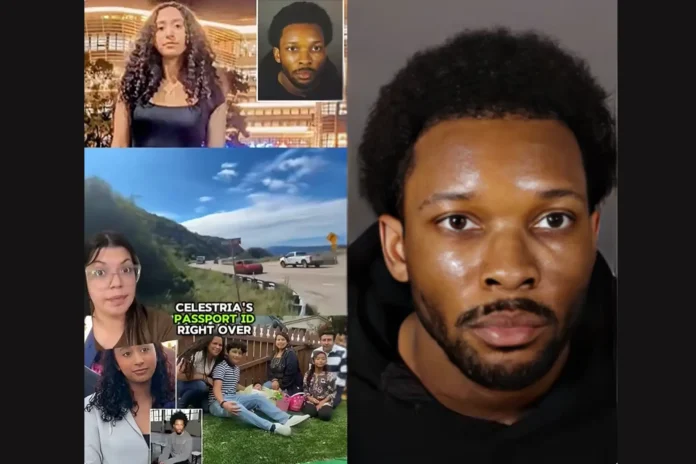
Viral social media posts this week claim investigators traced location data and metadata from photos on singer d4vd’s camera SD card to a remote roadside spot in Santa Barbara County. There, they linked the 21-year-old artist real name David Anthony Burke to the discovery of 14-year-old Celeste Rivas Hernandez’s U.S. passport card and other items.
True-crime commentator Kadisha, whose TikTok and X breakdowns have drawn heavy engagement, stated in recent videos that Burke allegedly photographed the isolated area himself. The prosecutors claim that this dumping spot was used after Burke murdered her.
The prosecutors have claimed that Burke stabbed Celeste several times just after she reached his house in Hollywood Hills by Uber ride on April 23, 2025. They allege he dismembered her body in the garage using tools including chainsaws and an inflatable pool bought on Amazon, then made repeated trips to the Santa Barbara County site the night of the killing plus returns on May 8 and May 31, 2025 to dispose of evidence.
A tweet from X.
The dismembered body parts of Celeste were recovered in September 2025 from the front trunk of a Tesla car which belonged to Burke. Passport card owned by Celeste was found by a Caltrans employee in January 2026 when he swept SR-154 around the Painted Cave Road area.
Burke was arrested in April 2026 for the offenses of first-degree murder, continuous sexual abuse of a child below the age of 14, and mutilation of the human body. His defense claimed that Burke had not committed the murder of the child.
The latest buzz centers on Burke’s camera SD card. Social media users, including a widely viewed May 7 post by @sogiddy, claim metadata, timestamps, and visual landmarks from recovered photos helped investigators pinpoint the remote area.
Many digital cameras and phones embed details like date, time, and sometimes GPS coordinates in image files. Investigators can cross-reference this with travel records, vehicle data, and landmarks visible in photos to map movements. This type of evidence has grown increasingly common in cases involving cloud storage and geolocation.
Though major news sources saw no public mention of SD card images tying directly in legal papers, prosecutors highlighted how often Burke returned to the location.
Now more than ever, rumors spread fast online alongside real interest. Yet authorities remind everyone to check original documents first. What shows up on screens isn’t always what happened. Trusted news groups agree proof matters most.
Burke remains held without bail. His team has not commented publicly on the latest social media claims.
As the preliminary hearing approaches, the case highlights how digital forensics from photo metadata to vehicle data now plays a central role in investigations. It also shows the power and pitfalls of social media in shaping public understanding of true crime before trial. Allegations remain unproven, and Burke is presumed innocent until a court decides otherwise. Developments continue to unfold.