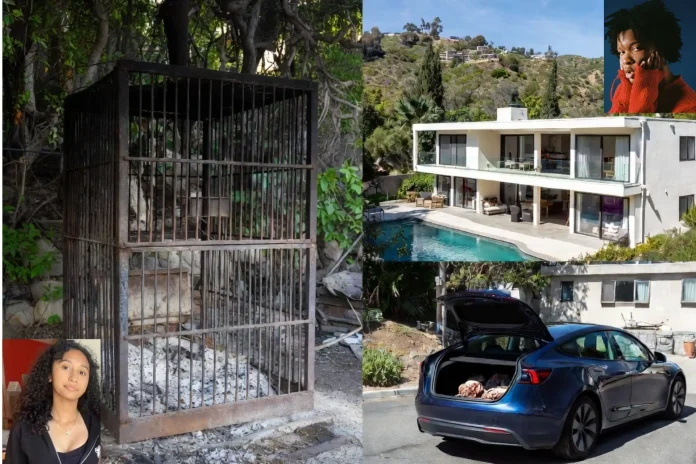
Police have seized a heavy-duty burn cage incinerator from the former Hollywood Hills rental home of singer d4vd, intensifying scrutiny in the ongoing investigation into the death of teenager Celeste Rivas-Hernandez. Authorities took the device after a private investigator discovered it still sealed in its original packaging inside the luxury property on Doheny Street. The 55-pound metal cage-style unit reaches temperatures hot enough to cremate human remains, though it remained unused and had been shipped under a false name.
The discovery came to light publicly on December 16, 2025, when private investigator Steve Fischer, hired by the home’s landlord to inspect the premises after d4vd abruptly broke the $20,000-per-month lease, shared details of his findings. Fischer noted that such incinerators are typically used for disposing of farm waste but remain illegal for use in Los Angeles County due to air quality regulations. He also pointed out other items in the home that were more commonly associated with rural settings than an upscale urban residence, although he did not specify them further. Police later collected the incinerator, suggesting it may hold evidentiary value despite not being seized during an earlier September raid on the property.
This development adds another layer of questions to a case that began with the grim discovery of Rivas-Hernandez’s decomposed and dismembered remains inside a bag in the trunk of d4vd’s abandoned 2023 Tesla on September 8, 2025. Tow yard workers in Hollywood alerted authorities to a foul odor from the impounded vehicle, which had sat parked near the rental home since late July. The 14-year-old girl, who had multiple runaway reports dating back to 2024, likely died weeks or months earlier, with forensics showing standard decomposition and no signs of freezing, contrary to some early rumors.
The Los Angeles Police Department’s Robbery-Homicide Division continues to treat the case as a homicide probe, with d4vd—whose real name is David Anthony Burke—reportedly viewed as a suspect but not yet charged. Investigators have analyzed digital devices seized from the home and heard testimony in a grand jury, including from a record label executive close to the singer. No arrests have occurred, and the cause of death remains deferred pending toxicology results, which can delay proceedings for months in severely decomposed cases. D4vd, who was on tour when the body was found and later canceled remaining dates, has maintained a low public profile since moving out of the residence.
From a journalistic standpoint, the presence of an unused incinerator capable of extreme heat in a home linked to a concealed body naturally fuels speculation about potential intent to destroy evidence, even if no direct use occurred. Yet the lack of charges underscores how investigators must build airtight cases reliant on forensic links and witness accounts, especially when public attention is high due to the singer’s fame and circulating photos suggesting a prior connection between him and the victim. Justice in such matters often moves deliberately to ensure accuracy over haste.
For more on the initial body discovery, see coverage from the Los Angeles Times. Details on the investigation’s status can be found in reports from ABC News. Background on the grand jury proceedings can be found via Court TV. The private investigator’s statements emerged in outlets like NewsNation.