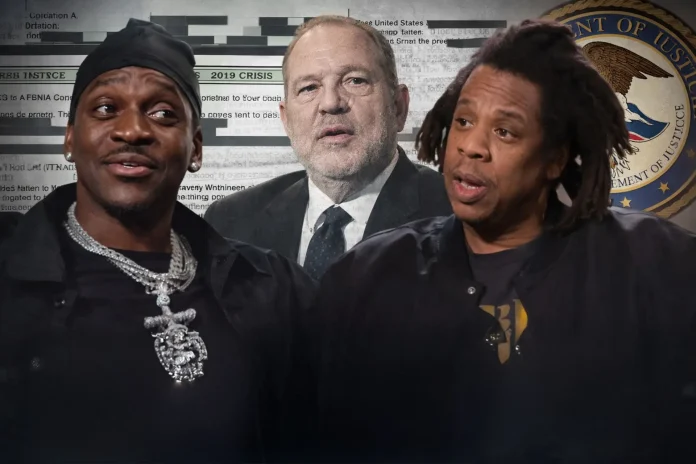
Unverified allegations against rappers Jay-Z and Pusha T surfaced today in a 2019 FBI hotline intake report, part of the U.S. Department of Justice’s release of over three million pages from the Jeffrey Epstein investigation. An anonymous caller claimed she was drugged and sexually abused over more than a decade, naming Jay-Z, whose legal name is Shawn Carter, as present during a 1996 incident alongside Harvey Weinstein, and alleging Pusha T acted as a “handler” facilitating abuse at parties in 2006 and 2007. These claims remain raw, unsubstantiated tips with no indicated follow-up by authorities, no charges filed, and heavy redactions throughout the document.
The report originated on July 10, 2019, shortly after Epstein’s arrest and amid a flood of public tips to the FBI’s National Threat Operations Center. The caller described multiple abductions and assaults, often waking in opulent settings she associated with Epstein’s Florida mansion, though details varied widely and included other prominent figures like financier Leon Black and former Attorney General William Barr. FBI notes recorded her refusal to provide a fixed address, her frequent hotel stays, and her statement of no diagnosed mental illness, while emphasizing the information as unverified relayed allegations.
Escalation began with the DOJ’s fulfillment of transparency obligations under the Epstein Files Transparency Act, uploading the massive trove late on January 30, 2026. Screenshots of the specific intake form quickly circulated on social media, amplified by accounts like the No Jumper podcast, sparking rapid debate across hip-hop forums and beyond. Public scrutiny focused on timeline inconsistencies—Jay-Z was an emerging artist releasing his debut album Reasonable Doubt in 1996, far from elite Hollywood circles dominated by Weinstein, while Pusha T’s prominence with Clipse peaked later, making high-level connections in 2006-2007 improbable without evidence.
As of January 31, no official statements have come from representatives of Jay-Z or Pusha T regarding this document, and no law enforcement actions have been announced tied to these specific claims. The broader release has drawn attention for including numerous unfiltered hotline reports, some containing fantastical elements that underscore the difference between public tips and proven facts. Available through the Department of Justice’s Epstein repository, the files serve as a reminder of investigative raw material rather than conclusive findings.
Journalistic scrutiny reveals why skepticism dominates reactions: the allegations lack corroboration, rely on a single anonymous source with clouded memory claims, and fit a pattern of speculative tips flooding authorities during high-profile cases. In hip-hop circles, discussions blend disbelief with references to ongoing unrelated legal battles involving Jay-Z, but many urge caution against conflating unvetted reports with guilt. This moment highlights the double-edged nature of transparency dumps—they illuminate investigative processes while risking reputational damage from unsubstantiated noise in an age of instant viral spread.
The involvement of Jay-Z and Pusha T appears limited to the caller’s narrative, with no supporting documentation like flight logs or witness statements in the released materials. Experts note that crisis intake forms exist primarily for record-keeping, not as evidence of wrongdoing. As coverage continues, the episode reinforces the need for measured reporting amid sensational disclosures, ensuring public discourse prioritizes verification over speculation.