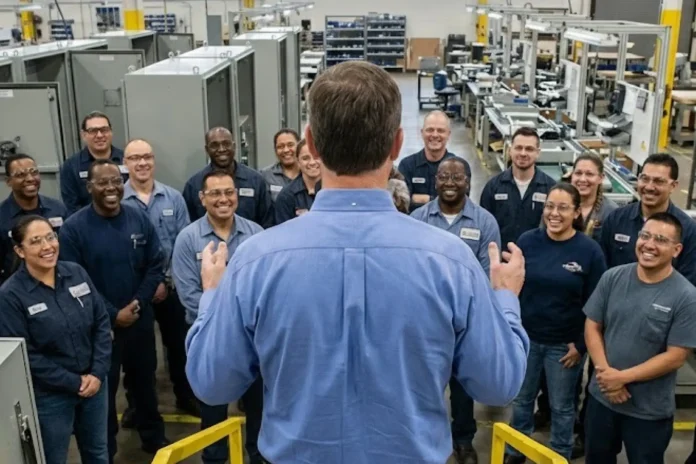
In a move that’s got everyone talking, Graham Walker, the CEO of a Louisiana manufacturing company, just turned a massive business deal into a life-altering windfall for his workers. After selling Fibrebond for $1.7 billion, he carved out $240 million 15% of the sale to hand out as bonuses to 540 full-time employees. That’s an average of about $443,000 each, paid out over five years.
Walker, 46, didn’t have to do this. His employees didn’t own a single share of stock in the privately held firm. But he made the bonus pool a must-have in the deal with buyer Eaton, a global power management giant based in Dublin.
A tweet from X.
Fibrebond started small back in 1982, founded by Walker’s father, Claud Walker, in Minden, Louisiana a town of just 12,000 people. They built shelters for electrical and telecom gear, growing through the ’90s cell phone boom. Tough times hit hard: a 1998 factory fire that could have ended everything, the dot-com bust that slashed the workforce from 900 to 320, salary freezes, and layoffs.
But the Walkers stuck by their people. They kept paying salaries during rebuilds and created aid funds for hard-hit families. Graham took over as CEO in 2015, steering the company toward data center and power infrastructure work. Demand exploded, sales jumped 400% in five years, and Eaton came knocking. The acquisition wrapped up on April 1, 2025, after an announcement in March.
When the bonuses hit in mid-2025, delivered in sealed envelopes, reactions were raw. Workers burst into tears, some thought it was a joke.
“Before, we were going paycheck to paycheck. I can live now,”
said Lesia Key, a 29-year veteran who paid off her mortgage and opened a boutique.
Others bought trucks, funded family trips to Cancún, cleared debts, or padded retirement nests. One employee, Hong “TT” Blackwell, retired early with a new ride. The five-year vesting means folks get the full amount only if they stick around, helping ease worries about job cuts after mergers.
This kind of wealth-sharing is unusual in U.S. manufacturing, where bosses often pocket the full haul from sales. Without stock options, it’s rare for blue-collar workers to see such perks. Yet studies prove it pays off: productivity under profit-sharing can rise as high as 15%, says Harvard Business Review.
In small-town Minden, the cash injection is rippling out boosting local shops and services. Mayor Nick Cox noted the economic buzz from all that spending. Amid rising income gaps, Walker’s choice spotlights how shared success can build loyalty and drive results, as seen in peer-reviewed research.
Walker, stepping down December 31, 2025, reflected:
“Close to a quarter-billion dollars in employees’ hands felt fair.”
He added,
“I hope I’m 80 years old and get an email about how it’s impacted someone.”
In a divided nation, this tale of fairness hit home, reminding Americans that good leadership can change lives.