

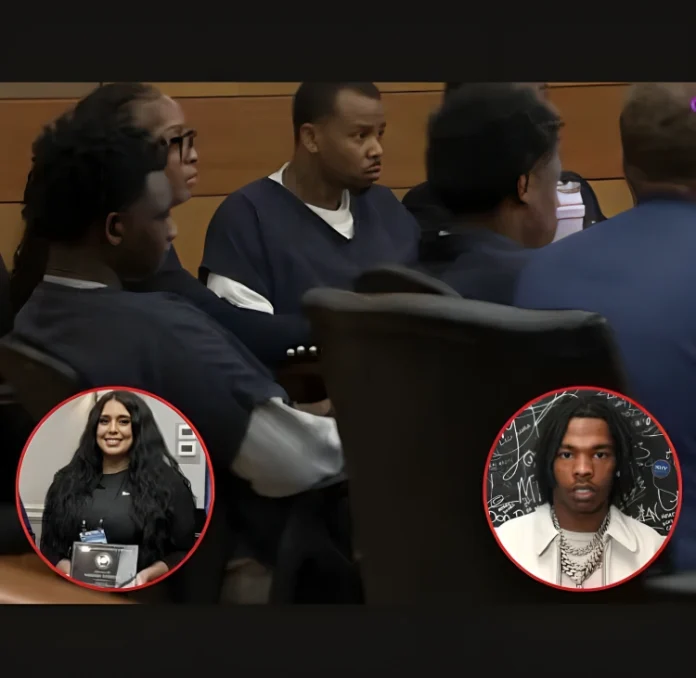
Recent charges against rapper Lil Baby and gang investigator Marissa Viverito sparked outrage and furor all over. Viverito, the most recognized authority on gang investigations, allegedly brought wiretap evidence to the courtroom, claiming Lil Baby placed bounties on individuals. The charges come at a time when the rapper’s legal woes have increasingly overshadowed his professional life, from the release of his 2020 project, My Turn.
However, the legality of the wiretap evidence is suspect. There are settled case law, as seen in United States v. Crabtree (2009), that support the position that wiretap evidence can be excluded when procured illegally, and this can weaken the prosecution case. This makes one wonder whether the alleged evidence against Lil Baby would hold up in court.
Marissa Viverito has worked on several high-profile gang trials, including the current trial of the Young Street Lifestyle or YSL case. Her past testimonies were questioned, and some lawyers and judges questioned discrepancies in her testimonies. During the trial of the YSL, one of the judges openly expressed frustration at her evidence, and this generated more questions as to whether she is a reliable witness.
These concerns present another complication to the case against Lil Baby. If the validity of Viverito is challenged, then it can impact how much the court takes the wiretap evidence she supposedly provided.
There are no reports or records that are credible that Viverito has provided wiretap evidence against Lil Baby for placing bounties on individuals. No credible news sources have verified these reports, and most are speculating whether or not disinformation is behind the drama.
Though no reports to date implicate Lil Baby as being involved in any bounty plot, his name was mentioned during law enforcement discussions in February 2025. The Atlanta Police Department (APD) gave a press briefing on the growing violence between gangs within the city. During this briefing, APD Homicide Commander Ralph Woolfolk discussed an Atlanta rapper whose music video shooting within the territory of a rival gang allegedly contributed to tensions that led to the fatal murders of 13-year-olds Jakody Davis and Lamon Freeman in July 2024.
Though Lil Baby was not explicitly mentioned at the press conference, reports and subsequent arrest warrants afterwards seemed to indicate that he was the one being referenced. This generated rumors of his possible involvement, despite no direct evidence pointing to his involvement in the violence.
Lil Baby’s attorneys, attorneys Drew Findling and Marissa Goldberg, moved swiftly to quash these insinuations. They described the APD’s allegations as “complete and total nonsense” and insisted that locations are chosen for music videos by an entire team of professionals, not the artist. They also condemned the APD as being “unprofessional, unethical, and shameful” and asserted that Lil Baby had “absolutely no involvement” in the matter.
At the individual level, Lil Baby also took to social media to address the spat. In an Instagram post, he warned his fans against being misled by “fake news” and reassured them of his good health. His response highlighted the growing issue of disinformation around high-profile criminal trials and the way media rumor-mongering can shape public opinion.
A post from X.
This case emphasizes the complex interrelationship among media reports, law enforcement, and celebrities. Celebrities are frequently bombarded by allegations that are given extra publicity, even when they don’t have any concrete evidence. Such situations raise important questions regarding the manner law enforcement and media shape public opinion and the challenges celebrities face when they try to refute unsubstantiated accusations.
Moreover, the outcry questions the use of wiretap evidence as a whole. While wiretaps are powerful investigation weapons, they must be obtained legally and presented by credible witnesses to be of any use in the courtroom.
