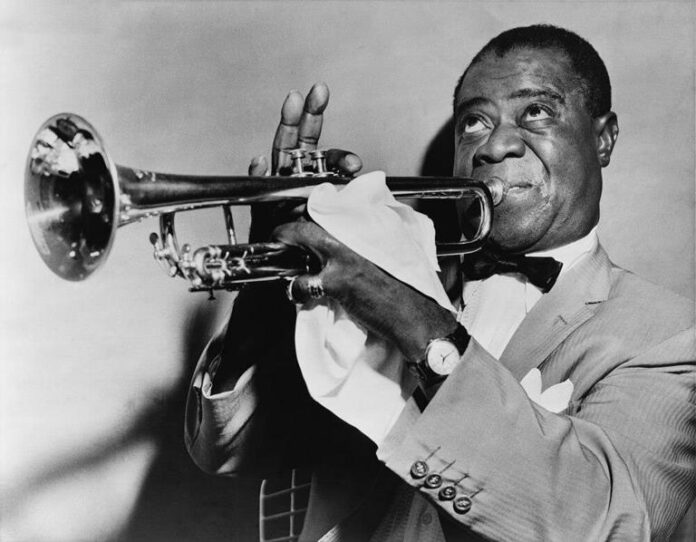
Louis Armstrong was an icon in jazz, entertaining millions with his music, but his life story was all passion, talent, and an enduring cultural legacy. Behind the soulful melodies and heartwarming performances, however, lies a less-than-harmonious tale-one of covert operations, Cold War politics, and unknowing involvement in the CIA’s intelligence schemes.
Scratching a little harder into the life of Armstrong brings a shocking truth-that when he went on world tours especially to Africa, all those tours were not as visible. Where he was there with his music as a symbol of goodwill, the CIA already had its plans and was using it for covert activities, using only Armstrong’s fame.
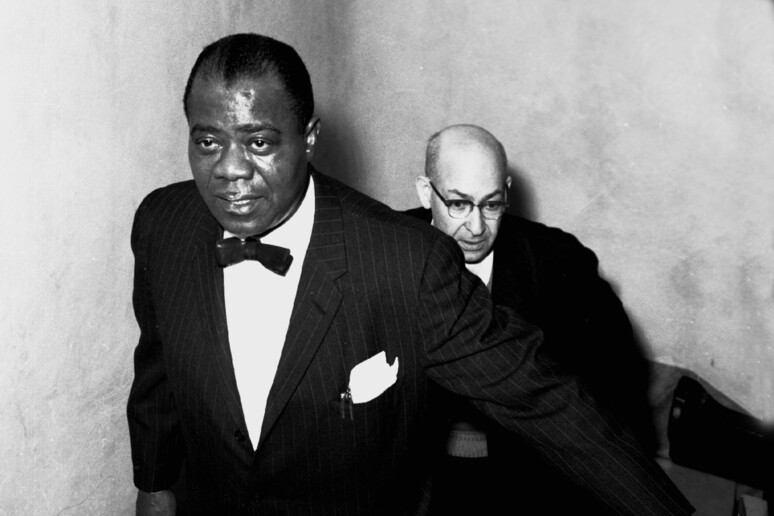
A Jazz Ambassador with a Secret Shadow
The United States was pitted against a heavy ideological war with the Soviet Union in the 1950s and the 1960s. And within this Cold War atmosphere, Africa became a crucial place of action. America counterbalanced Soviet influence by exposing Americans to culture, and naturally, it chose jazz, a medium of universal appeal.
Enter Louis Armstrong, one of the most iconic figures of cultural history, with his soulful voice and unprecedented mastery over the trumpet. The State labeled him a “Goodwill Jazz Ambassador” and sponsored him to embark on tours all around the world, the stated mission being to expose foreigners to American culture. Susan Williams challenges this notion of cultural exchange programs in her book entitled White Malice.
Behind the scenes, though, the CIA was masterminding these missions as Armstrong was the perfect “Trojan horse.” His fame opens doors to politically sensitive areas of interest to the U.S., such as the Congo. In reality, however, it was an opportunity to send CIA agents undercover, get inside information, and influence local leaders-which Armstrong didn’t know.
The Congo Connection
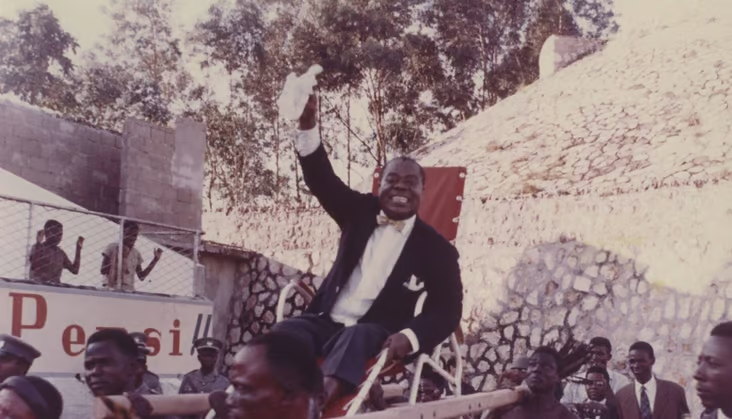
One of Armstrong’s most notable tours was in Congo during a critical moment in the nation’s history. The newly independent Congo was in the middle of political instability, and the CIA had vested interests, particularly in the rich uranium resources of Katanga.
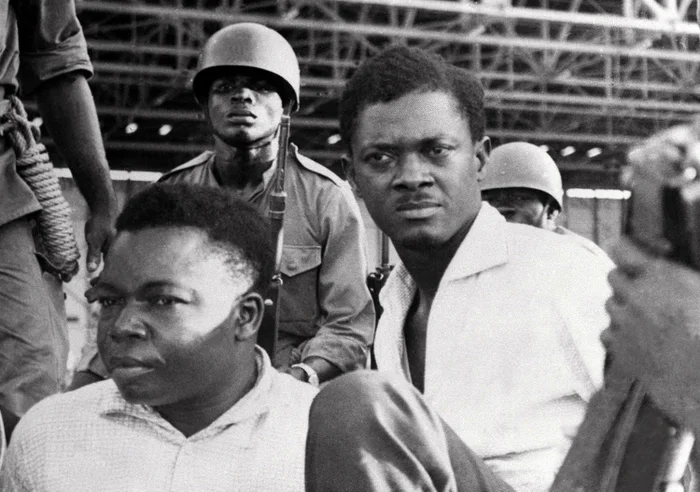
Armstrong performed in Katanga shortly before the assassination of the great Congolese leader, Patrice Lumumba-a fact in which the CIA was at the very least suspected. While Armstrong is entertaining crowds and facilitating this cultural exchange, the CIA is using his tours as cover for its more sinister operations, intelligence gathering, and covert action against leaders that are perceived as threats to U.S. interests.
The Ethical Dilemma
Armstrong loved music, as well as its magic when it came to unifying the people, so much so that Armstrong went to the point of belief. At the same time, Armstrong’s tours had strong political overtones that weighed heavy on his conscience. As he expressed it, “Music is life itself,” yet, actually, his art was bound with threads of Cold War politics.
These revelations also raise profound questions about the use and manipulation of artists for political purposes. Armstrong’s music brought joy and hope to audiences around the world, but it also became a tool in a geopolitical chess game-one to which he never signed on.
Mixed Reactions and Cultural Impact
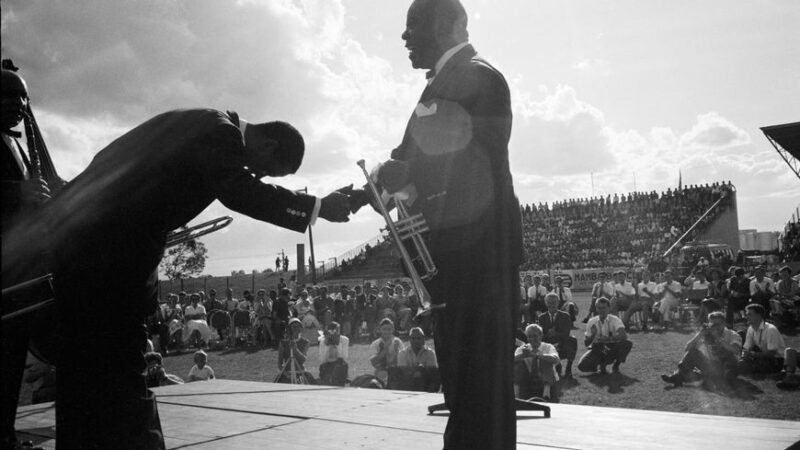
Despite the controversies, Armstrong’s tours had a profound cultural impact. In Leopoldville (now Kinshasa), over 10,000 people attended his concert—a number far exceeding expectations. He was celebrated as a cultural hero, symbolizing a connection to African heritage and modernity.
Armstrong’s music even brought temporary peace to the region, with reports of a ceasefire during his performance. It was a testament to the unifying power of art, even amidst political turmoil. However, not everyone understood his jazz style, highlighting the cultural gap between American art forms and local traditions.
A Legacy Complicated by Politics
Armstrong’s journey as a musician and cultural ambassador left an indelible mark on the world. His music transcended boundaries, but the political shadow cast over his tours complicates his legacy.
On one hand, these tours elevated Armstrong’s global stature, exposing millions to the beauty of jazz and its potential as a unifying force. On the other, they entwined his career with the murky waters of espionage and Cold War politics, a role he neither anticipated nor desired.
Reflecting on the Hidden Truth
Today, Armstrong’s story serves as a reminder of the power of art and its susceptibility to political exploitation. While his music continues to inspire, the hidden truths of his life add a layer of complexity to his legacy.
Louis Armstrong’s life was a symphony of triumphs and challenges, of melodies and machinations. As we celebrate his genius, we must also acknowledge the untold stories that shaped his journey—a tale of music, politics, and a man unknowingly caught in the currents of history.
It’s a legacy worth exploring, one that reveals not just the man behind the music, but the world that shaped and, at times, manipulated him.