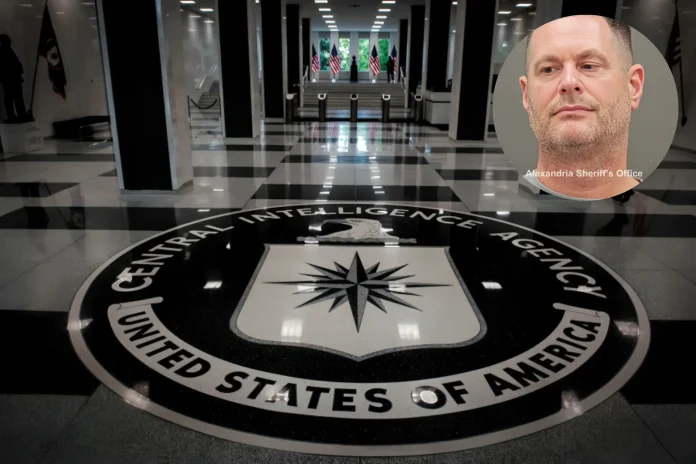
Federal agents burst into a quiet Northern Virginia home on May 18, 2026. Inside, they found stacks of gold bars, piles of cash, and luxury watches treasures belonging to a man who once held some of America’s most sensitive secrets.
Locked up today, David J. Rush once held top-level CIA access clearance marked Top Secret/SCI. Accused of treating secret operations like a private vault, he supposedly took over 40 million dollars’ worth of gold. Officials claim it wasn’t oversight. More like theft masked as routine. From inside the agency’s deepest layers, secrets flowed outward. Not for duty. For profit. Now evidence stacks high. A career unravels into numbers and bars of precious metal. Trust broken piece by piece. Gold weighs heavier than oaths.
Out of the blue, FBI officers showed up at Rush’s home in Ashburn, Virginia – tip came from the CIA. Inside, they hauled out close to 303 gold bars, each around a kilo, worth more than $40 million altogether. Cash turned up too, nearly $2 million in crisp American bills. Alongside that, some 35 high-end timepieces were pulled, quite a few being Rolex models. Later on, another stash of gold appeared in a rented unit just down the road from where he worked.
One day after the incident, authorities took Rush into custody. On June fifth, a judge in Alexandria decided he should stay behind bars until court proceedings begin saying people like him tend to run and have ways of tricking others, based on what legal teams shared. The moment passed without warning.
Years after joining the CIA in 2009, Rush climbed into the Senior Executive Service within the Directorate of Science and Technology. Working closely with Pentagon efforts, he connected operations tied to nuclear submarines along with classified projects. Clearance at the Top Secret/SCI level stayed active throughout his 17-year span. Behind high walls of secrecy, trust followed him like routine.
Yet investigators say he lied for years on security forms. He allegedly claimed degrees from Clemson University and Rensselaer Polytechnic Institute and experience as a Navy pilot. In reality, he enlisted in the Navy in 1997, served in the Reserves until 2015 as a lieutenant, and had no pilot qualifications or those college degrees.
Between November 2025 and March 2026, Rush requested and received large quantities of gold bars and foreign currency, claiming they were for “work-related expenses” tied to a classified operation.
Prosecutors allege he fabricated an entire top-secret Special Access Program (SAP) disguised as continuity-of-government planning for nuclear war scenarios. He reportedly used this fake program to justify the assets through a fraudulent defense contractor arrangement and may have briefed two colleagues as unwitting participants.
“The scheme allegedly exploited the extreme compartmentalization and secrecy of intelligence programs,”
Sources familiar with the investigation told The Washington Post.
He faces charges of theft of public money, primarily linked to fraudulent time sheets and improper military leave pay totaling around $65,000–$77,000. The broader gold allegations continue to be investigated.
Rush’s defense argues the gold was officially approved, stored securely, and accounted for as part of legitimate work.
Claims of a fully invented “fake doomsday program,” specific sham contracts, and unwitting accomplices stem from sources close to the probe but remain under active examination. No major outlets have reported CIA officials placed on leave as confirmed fact. Social media posts, including from Mario Nawfal, amplified dramatic details that require court validation.
The case raises serious questions about national security and oversight. How did someone allegedly maintain a fake résumé for nearly two decades inside one of the world’s most scrutinized agencies? Critics point to the “black programs” system itself designed to hide operations from adversaries as potentially shielding internal abuse.
“This represents a significant embarrassment for the CIA,”
One national security expert noted, highlighting risks in vetting and financial controls for classified work.
The investigation remains ongoing. Federal prosecutors continue building their case, and additional charges or details could emerge. Rush has not entered a plea on the main allegations.
America’s intelligence community prides itself on vigilance. This scandal tests public trust in the very systems meant to protect the nation.