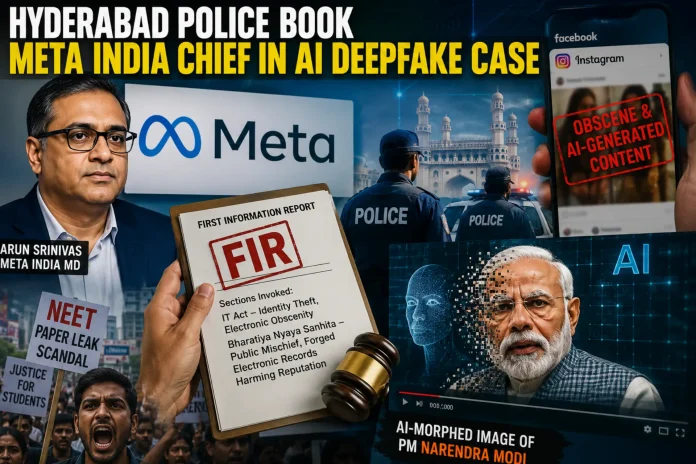
Hyderabad’s cybercrime cops just took a rare swing at Big Tech’s local boss. Police have registered two FIRs naming Meta India Managing Director Arun Srinivas and the operators of several Facebook and Instagram accounts over allegedly AI-generated, morphed, and obscene content targeting Prime Minister Narendra Modi.
The complaints came from BJP supporters, including Telangana party social media member T. Saikiran Goud and businessman S. Arvind Reddy. They handed police roughly 20 links to posts that, according to the filings, showed digitally altered or AI-manipulated videos and images of Modi in derogatory and misleading ways. Some also featured former education minister Dharmendra Pradhan and U.S. President Donald Trump. The material circulated during the Cockroach Janta Party-led student protests over the NEET exam paper leak scandal that forced the education minister’s resignation.
Police invoked sections of the Information Technology Act dealing with identity theft and electronic obscenity, plus Bharatiya Nyaya Sanhita provisions on public mischief and forged electronic records that harm reputation. Notices went out to Meta. The flagged links quickly went inactive. Investigators are still trying to identify and locate the account operators. No arrests have been reported, and the probe remains preliminary. A Meta representative has briefed police on the company’s moderation systems. Meta has not issued a detailed public response to the FIRs themselves.
Naming a senior platform executive as a co-accused is unusual. Most intermediary liability cases stay focused on the company or the users who post. This one tests how far Indian authorities will push personal accountability under tighter rules that demand faster removal of flagged unlawful content.
The timing lands amid broader friction. Days earlier, India’s IT ministry summoned Meta after a Modi video addressing the protests was briefly restricted Meta called it a technical glitch and later pledged extra safeguards for high-profile accounts. India is Meta’s largest market by users, so the stakes are high.
This is not just an Indian story. Governments in the United States, Europe, and elsewhere are wrestling with the same problems: deepfakes, AI-generated political content that is hard to detect, and the question of how much responsibility platforms should carry. India’s move puts real names on the line. It raises the practical question every democracy is now facing where exactly should the line fall between stopping harmful misinformation, protecting free speech, and holding technology companies accountable when synthetic content can spread faster than anyone can check it.