

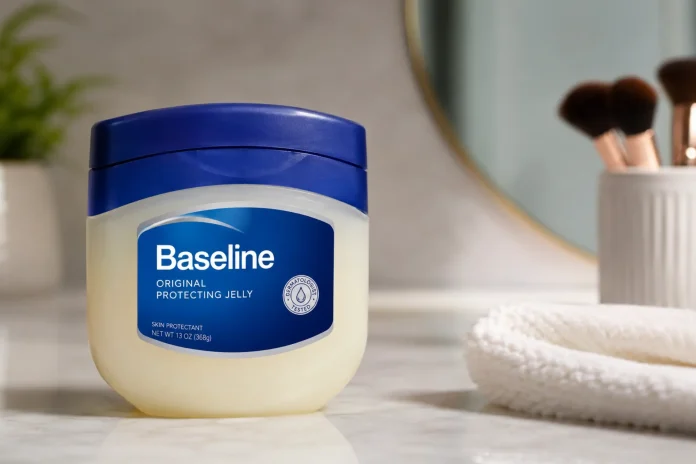
Vaseline has jokingly rebranded itself “Baseline” on its UK and India Instagram accounts after a Seoul-based beauty creator named Min Day Lee called petroleum jelly that for an entire video. By Friday the post had passed 36 million views, the brand had handed her the fake title “CEO of Baseline, effective immediately, no interview required,” and a Hindi-language campaign from Hindustan Unilever had already spun the joke into a community hashtag, #VaselineHijacked.
Lee is part of the broader creator economy that has turned Instagram haul videos into repeatable traffic. She runs the handle @mindaylee_, posted the original clip in August 2026 as a haul of mini Vaseline jars, tins, and tubes. According to Hindustan Times, she kept calling each one Baseline. Some viewers heard Baselin. Some heard BaSalein. The internet settled on Baseline and ran with it, and the audio started traveling as a meme the way audio-only trends do on Reels and TikTok: stripped down to one recognizable soundbite and re-attached to unrelated clips.
It is not really a slip. Korean does not have a native /v/ sound, and English loan-words that start with one tend to land closer to a bilabial stop, a /b/. Lee made that point in a follow-up clip, and gave two examples: violin becomes closer to biolin, visa becomes bija. The phonetic pattern is the same one that drove earlier viral mispronunciations by Korean speakers, and it is one of the more documented sound substitutions in Korean-English contact phonology. That is what gave the moment its hook. Lee was not botching a word. She was being a Korean speaker on camera, and the rest of the internet heard its own joke in the gap. It is the same structural beat as when a viral clip spreads faster than the facts behind it: the audio travels, the context catches up later.
The follow-up matters because it turned what could have been a one-day meme into something the brand could actually respond to. The pattern in viral-creator-driven brand moments, like the recent Hailey Bieber Rhode peptide lip lawsuit saga or the Korean military dancer controversy, is that the creator has to either correct themselves, deflect, or stay silent. Lee did the third thing. She explained the underlying language, let the pronunciation stand, and let the brand do the rest.
Vaseline, which is owned by Unilever and runs the India business through Hindustan Unilever, picked up the joke on the UK account on Thursday. The first line was short: “We heard you. We agreed.” Then came the longer mock-corporate statement, which is the part worth quoting.
“Following extensive review (by which we mean approximately one video, watched over 1 million times, facts), Vaseline would like to announce our rebrand. Welcome to Baseline, effective immediately.”
That is the moment the joke crossed from creator-side into brand-side. Dexerto’s writeup noted that the rest of the post kept the same dry register: same tub, same jelly, same uses people have been making up since 1870, just a different first letter depending on where you say it. The UK and India accounts swapped their avatars for Baseline wordmarks and pushed fake packaging mockups around. The legal trademark is still Vaseline. Store shelves have not been reprinted. No factory has changed a label.
What makes this moment worth watching is not the joke itself. It is the playbook. Indian marketing, in particular, has spent the last two years perfecting the “brand joins the meme instead of correcting it” move, from Ariel responding to a soap tweet to Zomato treating customer complaints as content. Pratik Ved, vice president of skincare at Hindustan Unilever, framed the Baseline moment in exactly that language. Speaking to afaqs!, he said: “We didn’t create this moment; the internet did. Our job was to simply show up. ‘Bassline’ is proof that when a brand is genuinely loved, people will remix it in ways no brief could ever imagine, and all we can do is thank them for it.”
That quote, more than the UK account’s mock statement, is the part most outlets underplayed. India’s feed pushed the pronunciation even further, into “Bassline” with two S’s, which is how the audio actually sounded on the original clip. The brand ran stretched captions like BASELINEEEEEEE, started tagging creators as “Vaseline-Verified Hijack Icons,” and turned the moment into a participation contest. By the time the rest of the world caught up, the India team had already turned a phonetic accident into a campaign brief. Other viral cross-cultural moments have hit similar notes, but Vaseline’s response is the cleanest version of the “brand surrenders” pattern so far this year.
Lee, for her part, accepted the title. She replied to the brand’s CEO post with a short “Thank you. It’s truly an honor.” In a separate clip she explained again that the b/v shift is structural to the language, not a one-off, and pointed to other loan-words that go through the same change in Korean speech. Her follower count had been climbing through August: 1.1 million on Instagram and roughly 730,000 on TikTok as of last week, according to coverage from the Korean outlet Asia Business Daily. Before this week, English-language media had not named her in a headline.
The product itself has been around since 1870, when the chemist Robert Chesebrough started selling petroleum jelly under the Vaseline name after watching oil-field workers in Titusville, Pennsylvania use a residue called “rod wax” on cuts and burns. Unilever acquired the brand in 1987 and now sells the classic jelly plus lotions, lip tins, and limited editions in more than 70 countries, alongside the wider wave of celebrity-backed skincare lines reshaping the category. The word has become generic for petroleum jelly in plenty of languages, which is part of why a single pronunciation clip can travel this far this fast: the brand is everywhere the meme lands.
News18 published a one-line FAQ on Friday that said the name on the jar has not legally changed. The avatars did. India Today, Hindustan Times, and Dexerto covered the campaign as a joke, not a corporate filing. The wider X conversation split into two tracks. The first was the original clip and the brand’s mock statement.. The legal-name question and the brand-side response are separate stories; the only thing they share is the trigger clip. The legal-name question, the on-X financial activity, and the brand-side response are all separate stories; the only thing they share is the trigger clip.
Lee’s video worked because it was specific. A Korean speaker, holding a wall of branded minis, repeating one word until the sound became the joke. Vaseline’s reply worked for the same reason. It did not correct her. It printed her version on the logo for a week and handed her a fake title. Whether the meme ages well depends on whether Hindustan Unilever’s hijack-icon push keeps momentum past the news cycle, or whether it collapses into another week-of-content that the algorithm forgets. Either way, the play itself is now the template. Brands that try to defend their names against their own customers keep losing this fight. Brands that hand the customer the logo and a fake title are at least interesting for a day.

