

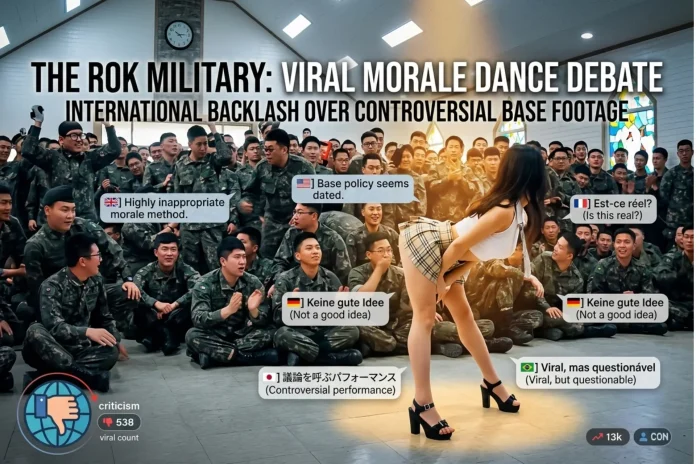
A video from 2018 depicting a young fitness model performing provocative dances for South Korean soldiers has gone viral again in 2026, prompting renewed backlash from online users across multiple countries who view it as an example of outdated objectification masquerading as morale support. The footage, shared on X by journalist Dom Lucre on March 11, 2026, shows the performer in a revealing outfit executing moves such as hip thrusts, bends, and floor routines amid cheers from uniformed troops in a hall with chapel-like arched windows. By midday on the same date, the post had accumulated over 107,000 views, more than 1,100 likes, and hundreds of replies, with sentiments split between condemnation for its perceived vulgarity and defenses highlighting it as effective entertainment compared to other formats.
The event took place on August 15, 2018, during Korea’s Liberation Day celebrations at a facility managed by the South Korean Capital Defense Command, where the 21-year-old model and gym coach was part of a lineup that included music, magic acts, and singing organized by a private group. Critics at the time, and now in the resurgence, argue that the performance demeaned women and cast the military in a poor light, especially given the venue’s religious undertones suggested by stained-glass elements. An online petition in 2018 gathered over 15,000 signatures demanding a halt to similar shows, reflecting broader concerns about sexual commercialization within South Korea’s patriarchal structures and mandatory male conscription system.
In the wake of the original uproar, the Capital Defense Command released an apology on August 20, 2018, admitting insufficient review of the program’s content and committing to enhanced scrutiny for future morale activities. This response underscored the challenges of aligning traditional troop motivation tactics with evolving societal expectations around gender equality. Recent discussions in 2026 have also drawn attention to why female K-pop idols and performers increasingly avoid such military gigs, citing behind-the-scenes disturbances and discomfort from overly enthusiastic audiences that have led to a decline in these once-common appearances. For visual context of similar past events, here is a video from a South Korean military performance:
The 2026 viral moment, accessible via this X post, has elicited diverse reactions, including mockery of critics as overly sensitive and comparisons to alternative entertainments like drag performances in Western militaries. Comments on the thread, now exceeding 300, range from supportive remarks about the dancer’s impact on troop spirits to humorous observations about the setting’s resemblance to a church. This revival illustrates how archived content can fuel ongoing global conversations about cultural norms in military welfare, particularly as South Korea continues to modernize its approaches to soldier well-being amid two-year compulsory service requirements.
Comparing to U.S. Military Entertainment Practices
While the South Korean incident highlights a more isolated and controversial approach, U.S. military entertainment through organizations like the United Service Organizations (USO) since 1941 emphasizes diverse, family-oriented programs including celebrity concerts, comedy sketches, and athlete interactions to foster connections between troops and home life. These efforts reach over 425 installations annually in 34 countries, focusing on uplifting deployed personnel without the overt sexualization seen in the 2018 Korean video. For instance, groups like the Dallas Cowboys Cheerleaders have conducted 85 USO tours since 1979, delivering coordinated athletic dances in modest uniforms, workshops, and meet-and-greets that prioritize inspiration over provocation, even extending to family-oriented camps.
U.S. programs have evolved significantly since earlier eras, such as Vietnam War shows featuring stars in revealing attire, influenced by movements like feminism and #MeToo to adopt more inclusive formats. Controversies in the American context often revolve around political issues rather than content explicitness, exemplified by the 2023 Pentagon decision to prohibit drag shows on bases following conservative critiques that deemed them inappropriate for defense funding. Drag performances, a longstanding morale tradition dating back to World War II with soldier-led sketches, faced cancellation amid claims of cultural politicization, contrasting with the Korean backlash centered on gender objectification.
Broader U.S. morale challenges, including surveys showing low soldier optimism and ethical concerns in special operations, tie less to entertainment styles and more to deployment stresses. This comparison reveals cultural divergences: South Korea’s event recalls historical U.S. practices but stands out for its solo, suggestive nature, while modern American initiatives stress variety and equity to minimize scandals. Both nations, however, adapt to public pressures, with the Korean military implementing stricter vetting post-2018 and the U.S. navigating ideological divides over inclusivity.
This ongoing discourse emphasizes the delicate balance militaries must strike between tradition and contemporary values, ensuring entertainment enhances rather than undermines dignity and unity. For further reading on the original 2018 controversy, visit this detailed account or explore insights into why performers are opting out in this video analysis.

