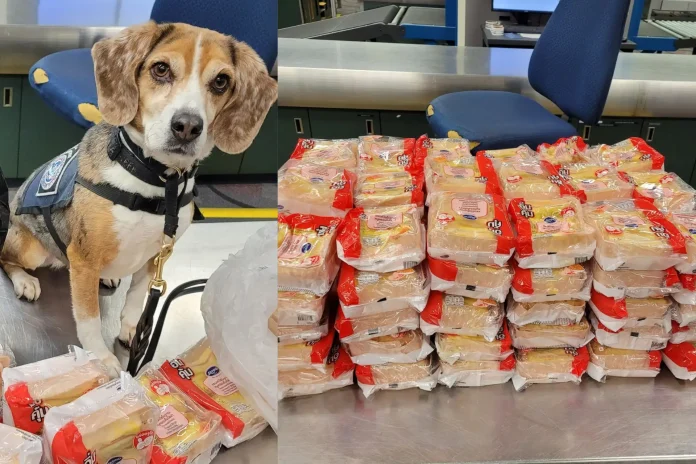
A highly trained beagle working with U.S. Customs and Border Protection made headlines this week after sniffing out more than 100 prohibited pork and chicken sandwiches in a passenger’s suitcase arriving from Thailand.
On April 18, 2026, at a major airport in the Washington, D.C. area, Merla — a member of CBP’s celebrated Beagle Brigade — calmly sat down next to a suspicious bag on the baggage carousel, signaling officers to the concealed items without causing any disruption to fellow travelers.
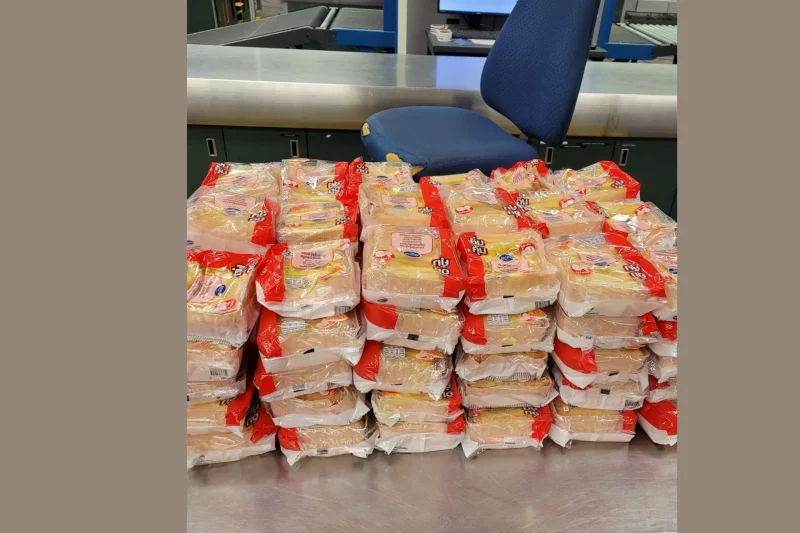
Upon inspection, agents discovered a substantial stash of popular Thai 7-Eleven “toasties” — toasted sandwiches filled with pork floss, pork bologna, and chicken. These affordable, grab-and-go snacks are a everyday favorite across Thailand, often picked up for a quick bite at convenience stores.
All of the items were seized and destroyed in accordance with strict U.S. agricultural import regulations. The traveler was educated on the requirement to declare all food products upon entry into the United States.
CBP enforces some of the toughest rules in the world on meat and poultry products, even when they are commercially packaged and cooked. The restrictions are designed to safeguard American livestock from highly contagious foreign animal diseases, including African Swine Fever, Foot-and-Mouth Disease, and avian influenza.
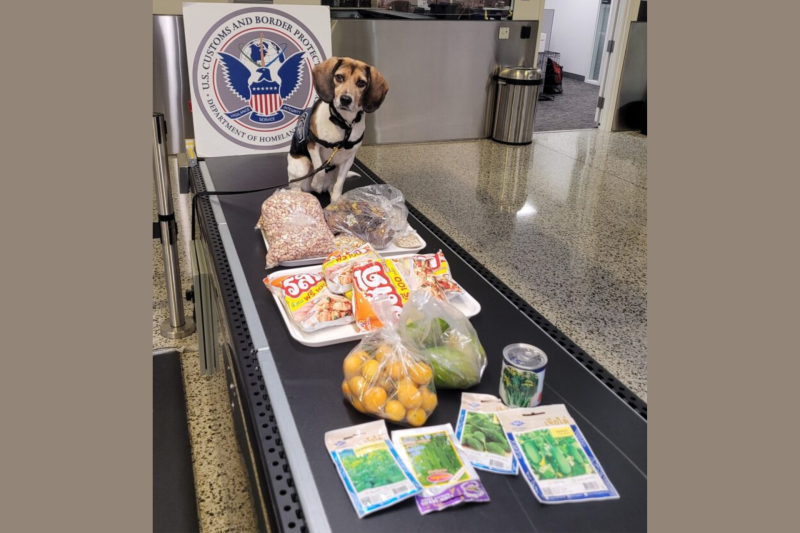
“Even small amounts of meat in prepared foods can potentially carry pathogens,” a CBP spokesperson reminded travelers. Officials stress that all agricultural items — including meats, dairy, fruits, and prepared foods — must be declared on the customs form. Failure to do so can result in the items being confiscated and, in some cases, civil penalties reaching up to $10,000.
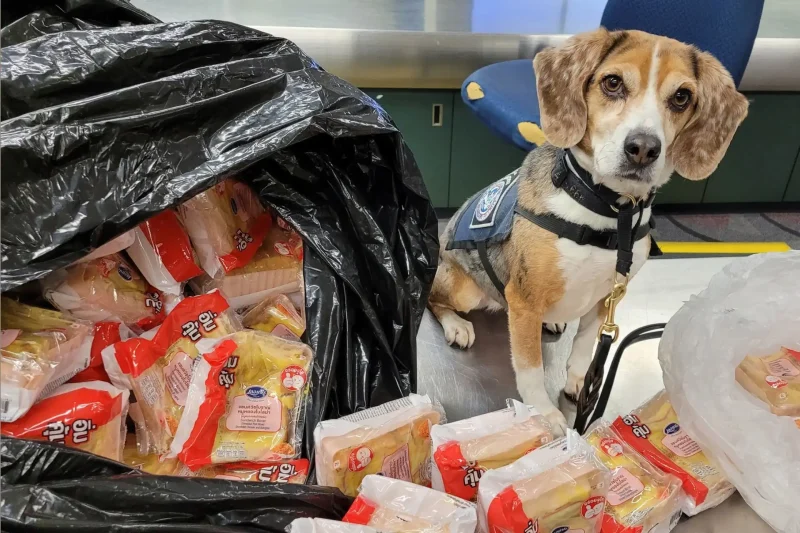
Merla is one of many beagles in CBP’s agricultural detection program. The breed is favored for its exceptional sense of smell, friendly demeanor, and non-intimidating presence in busy airport environments. Unlike drug or explosive detection dogs, these specialized K9s focus exclusively on food and plant products that could threaten U.S. agriculture.
The story quickly gained traction online, particularly among Thai communities and frequent travelers familiar with the beloved 7-Eleven toasties. Social media reactions ranged from amusement at the sheer quantity (“Someone really loved those sandwiches enough to pack over 100”) to mild disappointment over the loss of a cheap comfort food staple.
The incident serves as a timely reminder for international passengers: while those Thai toasties may be tasty and convenient back home, they are generally not permitted to enter the U.S. without proper declaration.
Travelers are advised to enjoy such snacks before departure or stick to clearly safe, meat-free packaged items. The latest guidelines are available on the official CBP and USDA APHIS websites.
Good work, Merla. One professional sniff at a time, she continues to help protect American agriculture. 🐶