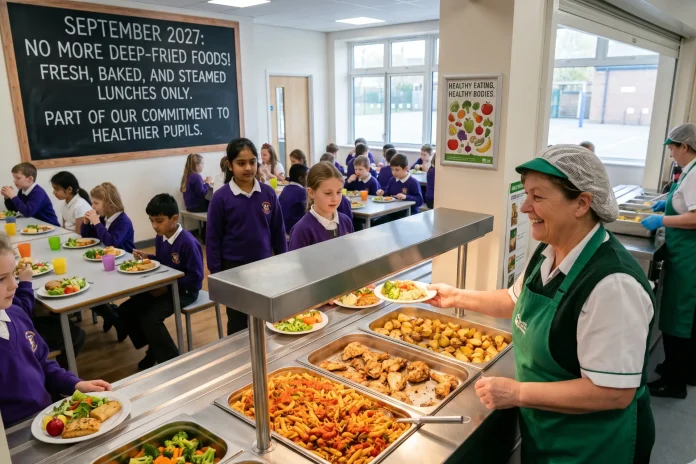
The U.K. Labour government has announced plans for the most significant overhaul of school food standards in England since 2012, including a full ban on deep-fried items from school lunches starting in September 2027.
The changes, unveiled on April 13, 2026, target high-fat, high-sugar and convenience foods in an effort to combat childhood obesity and tooth decay. Deep-fat frying will be completely prohibited in school kitchens for lunches and any breakfast provisions, effectively removing staples such as traditional deep-fried chicken nuggets, fish and chips, and other battered or fried options.
Breadcrumbed or battered items — including oven-baked or air-fried alternatives like fish fingers or coated chicken — will be restricted to a maximum of once per week. High-sugar and high-fat “grab and go” options such as pizza, sausage rolls and cakes will no longer be available daily, with many limited to once a week. Desserts and puddings face even stricter rules: they must contain at least 50% fruit by content, largely phasing out classics like jam doughnuts, steamed sponge with custard or fruit-free cakes. Sweetened items including ice cream, waffles and jelly will also be capped at once weekly, with proposals for at least one fruit-only dessert day.
Sides cooked in oil or fat, such as chips or hash browns, will be limited to twice a week. The reforms place a stronger emphasis on vegetables or salad with every meal, wholegrains, fibre-rich options and fruit replacing sugary treats for most of the week.
Education Secretary Bridget Phillipson described the plans as “long overdue” and “ambitious,” with the government aiming to deliver “delicious, nutritious food” that supports better concentration and long-term health rather than simply imposing restrictions. Early Education Minister Olivia Bailey has also endorsed the measures.
The push comes amid concerning public health statistics: one in three children leaves primary school overweight or obese, while tooth decay remains the leading cause of hospital admissions for ages 5–9, often requiring multiple extractions under general anaesthetic due to excessive sugar consumption. Ministers argue that schools, where many children eat their main hot meal of the day, have a key role in shaping healthier habits and addressing inequalities that hit disadvantaged backgrounds hardest.
A nine-week public consultation launched alongside the announcement to gather input from parents, schools, caterers and health experts. Final standards are expected in September 2026, with phased implementation beginning in September 2027. Schools will receive support for staff training and equipment changes, and will be required to appoint a lead governor for school food while publishing menus and policies online for transparency.
Current compliance with existing (weaker) standards is reportedly low in many schools, prompting tighter enforcement under the new rules.
Reactions have been mixed. Supporters view the overhaul as a necessary public health intervention, while critics — including some parents — worry it could make meals less appealing to picky eaters who favor “beige” foods like nuggets and chips. Concerns include potential reduced consumption, increased waste, more unhealthy packed lunches from home, or the measures feeling overly paternalistic. The plans have drawn comparisons to Jamie Oliver’s earlier school meal reforms, which faced notable backlash.
The rules will apply to state schools and most academies in England, covering free school meals, paid lunches and breakfast clubs where provided. Schools in Scotland, Wales and Northern Ireland operate under separate standards and are unaffected.
In place of restricted items, menus are expected to shift toward baked or grilled proteins, vegetable-heavy mains, wholegrain sides and fruit-based desserts. The government hopes the updated offerings will remain appealing while meeting nutritional goals.
The proposals remain in the consultation phase, meaning final details could still shift based on feedback. They form part of the Labour government’s wider focus on child health and reducing long-term pressures on the NHS.