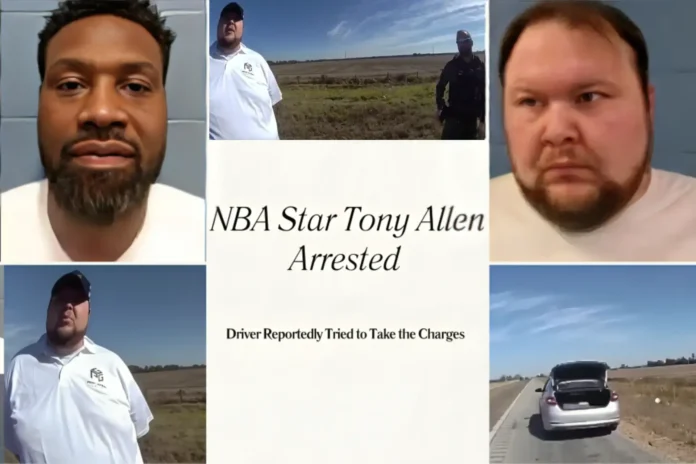
Loyalty can sometimes redefine a moment of crisis, as seen when a former NBA player’s driver stepped up during a tense arrest.
Tony Allen, celebrated for his defensive skills and a championship win with the Boston Celtics, found himself in handcuffs on November 5, 2025, following a traffic stop in Poinsett County, Arkansas. Officers pulled over the vehicle on Interstate 555 after noticing a lane change without signaling, leading to the discovery of drugs inside. This event quickly spotlighted questions about accountability and friendship in the public eye.
The stop began calmly enough, with Hatton, a 33-year-old Memphis resident and former wrestler, explaining they were en route to a podcast recording in nearby Jonesboro. A whiff of marijuana prompted deputies to order both men out, leading to a pat-down that found a small package of the substance in Allen’s pocket and under two grams of cocaine in a cigarette box by his seat. Field tests confirmed the findings, and as officers explained constructive possession rules—holding nearby parties responsible—tensions rose along the rural highway shoulder. Allen, dressed in a Grizzlies hoodie that paid homage to his Memphis roots, remained cooperative yet visibly shaken throughout the ordeal.
Bodycam footage lays bare the charged dialogue that followed, starting with Hatton’s urgent interventions as cuffs clicked on.
Sir, please do not charge that man with that—let me take full responsibility
Hatton pleaded, his voice cracking with emotion as he referenced his lawyer father for emphasis. He insisted he had picked Allen up at 8:43 a.m. that day, swearing the passenger knew nothing of the drugs.
I guarantee you he had no idea that it was in there… Tony Allen has absolutely nothing to do with this. Not a single thing.
Officers responded methodically, noting that a judge could review the claims later, but charges were filed for both under state law.
Allen, meanwhile, poured out his frustration in bursts that mixed defiance and dismay, turning toward Hatton at one point to shout.
Y’all bogus, bruh—you should’ve never came and got me! I got too much to lose to be f***ing with you, man!
He repeatedly denied any involvement, protesting to the deputies.
I promise I don’t do no cocaine, sir… On all five of my kids, I wish I would have never got in the car.
Even in the patrol car, his agitation peaked with a lighthearted jab at his frame.
I can’t fit in here, bro, I’m 6’5″
Drawing a brief chuckle from an officer amid the gravity. These words, now circulating widely online, paint a picture of a man caught off guard, wrestling with the fallout on a career built on resilience.
Both posted $1,000 bonds and walked free the same day, facing a Class D felony for the cocaine—up to six years in prison and $10,000 fine—and a misdemeanor for marijuana, carrying a year in jail and $2,500 penalty. Arkansas statutes on controlled substances leave little room for leniency in such cases, though Hatton’s on-record confession could sway a judge toward dropped counts for Allen. Forensic lab results are pending, potentially clarifying ownership through residue or packaging analysis. The duo’s next court appearance looms, with federal probation from Allen’s 2023 fraud plea adding extra stakes if violations are found.
Allen’s post-NBA life has centered on giving back, from real estate ventures to youth mentoring programs that echo his “Grindfather” nickname earned in Memphis. This detour risks tarnishing that narrative, especially after his role in a multi-million-dollar insurance scam, where he admitted to making false claims and was given supervised release. Yet the footage’s human elements—Hatton’s self-sacrifice and Allen’s pleas—invite reflection on how everyday rides can upend legacies. Community leaders in Memphis have rallied quietly, urging focus on the full story over headlines.
Stories like this one compel us to consider the fragile line athletes walk long after the final buzzer, where one passenger seat can test bonds forged in shared hometowns. Hatton’s stand, hailed in viral clips as peak loyalty, contrasts sharply with tales of isolation in similar busts, underscoring a need for robust off-court safeguards. True reporting here means amplifying voices without verdict, letting evidence and empathy guide the discourse. For official developments, check the Poinsett County Sheriff’s resources, where transparency meets accountability in real time.