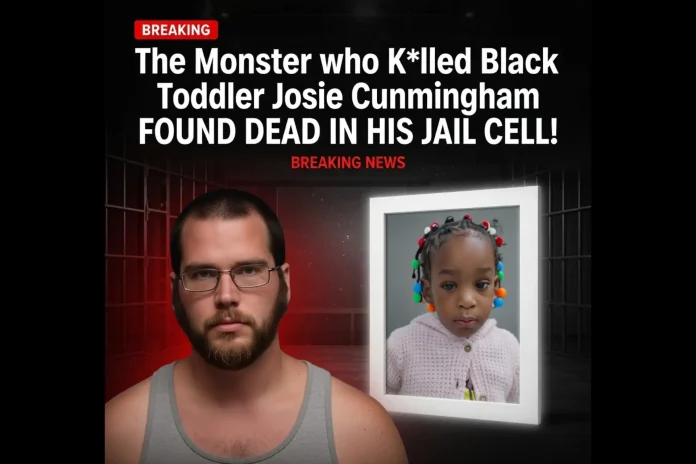
Robert Fisher, convicted of the brutal rape and murder of 3-year-old Josie Cunningham after drugging her and attempting to erase evidence with bleach wipes, died in his prison cell at Elmira Correctional Facility on October 22, 2024, mere weeks into his life sentence. This swift end to his incarceration has prompted widespread public discourse on whether true justice was served for the young victim, whose life ended in unimaginable horror while under his care as a babysitter. Families affected by similar tragedies often grapple with the tension between legal outcomes and personal closure, especially when prison deaths occur under unclear circumstances.
The crime unfolded in Rensselaer, New York, where Fisher, then 34, had been entrusted to watch Josie on the evening of July 6, 2023, by her mother, Laquesha Cunningham, a recent acquaintance through a neighbor. Court records detail how he crushed prescription medications including alprazolam, olanzapine, and clozapine into a drink to sedate the toddler before assaulting her, leading to her death from homicidal violence that included asphyxiation and severe trauma. In a desperate cover-up, Fisher used Clorox bleach wipes to clean her body, aiming to remove DNA traces, but Josie’s mother discovered her lifeless form the next morning, marked by foam at the mouth, bruises, and blood, prompting an immediate arrest.
Fisher pleaded guilty to second-degree murder and first-degree rape on July 9, 2024, in Rensselaer County Court, avoiding a trial that would have forced the family to relive the details. Sentenced on September 10, 2024, to 20 years to life, he entered state custody at Elmira on September 23, a maximum-security prison operated by the New York State Department of Corrections and Community Supervision. Josie’s brother, Jy’Quan Stewart, publicly advocated for the death penalty during proceedings, highlighting the family’s profound grief and frustration with what they viewed as a lenient punishment for such an atrocity.
Prison officials found Fisher unresponsive during a routine check at 1:27 a.m. on October 22, 2024, and he was pronounced dead at 1:50 a.m., with initial reports indicating a medical emergency. Notably, another sex offender, William Brand, died at the same facility just over an hour later, raising questions about potential coincidences or systemic issues. Despite requests for transparency, the Chemung County Medical Examiner’s Office has not publicly released the official cause, and incident reports remain heavily redacted, leaving the exact nature of his death undetermined even years later.
Social media erupted with reactions to Fisher’s death, with many users expressing relief or even celebration, viewing it as karmic retribution for his crimes against a vulnerable child. Comments on platforms like X and Instagram ranged from calls for commissary donations to prison groups to critiques of media coverage disparities in interracial child abuse cases. This outpouring reflects broader societal frustrations with the criminal justice system’s handling of child predators, where prison often becomes an unofficial arena for extralegal consequences.
In analyzing this case, the rapid demise of Fisher spotlights ongoing challenges in protecting high-risk inmates, particularly those convicted of child-related offenses, who face heightened dangers from fellow prisoners. Such incidents also underscore racial dynamics in crime reporting, as Josie’s story, involving a Black toddler and white perpetrator, received less national attention compared to similar cases with reversed demographics. Ultimately, while the legal system delivered a conviction, the prison death complicates narratives of accountability, prompting calls for reforms in both sentencing guidelines and inmate safety protocols from advocates like those at the Rensselaer County District Attorney’s Office.