

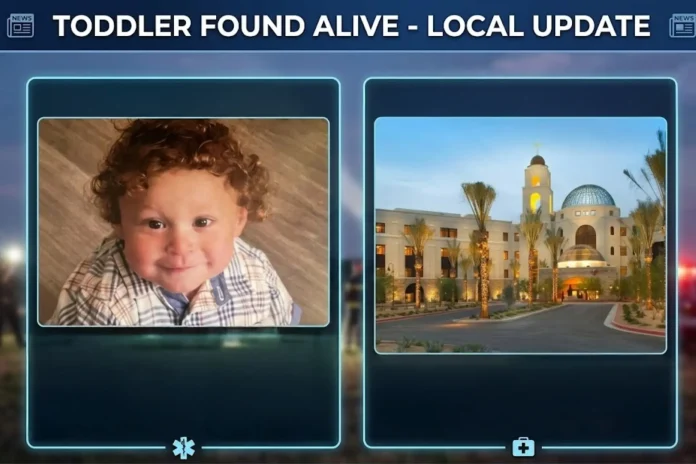
An 18-month-old boy named Vincent Lorenzo Fiordilino from Gilbert, Arizona, was found alive and breathing in a hospital morgue nearly six hours after medical staff had pronounced him dead following a near-drowning in his family’s backyard pool on February 8, 2026. The child had been discovered submerged during a family gathering on Super Bowl Sunday and received initial resuscitation at the scene before transport to the emergency department. This sequence of events ultimately led to his survival after the body was placed in cold storage and later examined by additional personnel, with the case drawing scrutiny comparable to another miraculous family recovery story that captured national attention.
The boy was located floating face down in the residential pool and had remained underwater for approximately ten to fifteen minutes before family members noticed and began cardiopulmonary resuscitation. Emergency responders continued those efforts during transport to Mercy Gilbert Medical Center, where hospital staff took over advanced life support measures. Around 6:20 in the evening, the attending physician declared the time of death, even though police officers on scene and a nurse had noted possible ongoing vital signs, including a reported pulse and audible gasping from the child. The doctor reportedly set aside the officer’s concerns by stating that medical training and expertise should guide the process without further interference at that stage, according to a court-record reconstruction by KPNX 12News in Phoenix.
After the pronouncement, the body was moved to the hospital’s cold room used for holding remains prior to further handling. Officers who stayed nearby documented repeated instances of air release and gasping sounds from the child, both during the transfer and while the body remained in that room. At 11:52 that night, members of the medical examiner’s transport team arrived to retrieve the body for their procedures and discovered that the child was breathing independently. This observation prompted immediate action to stabilize him and arrange air transport to a higher-level pediatric care facility, and the full chain of events was later detailed in the national NBC News investigation.
The child received specialized treatment at Phoenix Children’s Hospital and has since been released to continue recovery at home. He requires periodic assistance with breathing while his lungs heal, and is participating in extensive therapy programs along with regular medical monitoring to track progress. Follow-up evaluations have indicated no major brain damage, although a small area of bruising may contribute to temporary balance considerations that are expected to improve with growth and development. The family has described him as their miracle baby, calling the survival the kind of family perseverance echoed in a father’s instinctive protection of his family during a disaster, and has established a dedicated support page through their GoFundMe to help manage the financial aspects of his continued care and rehabilitation needs.
Local police investigators referred the case to prosecutors with a recommendation for child abuse charges against the parents after determining that possible impairment from marijuana use earlier that day may have affected supervision during the gathering. The hospital system completed an internal review of the entire response and indicated that adjustments are being made to strengthen verification procedures in similar high-intensity situations. Details regarding the physician who made the initial pronouncement are available through standard professional licensing and directory resources.
This incident highlights the inherent difficulties in confirming death during aggressive resuscitation attempts, especially with young children, where vital signs can be subtle, intermittent, or subject to return under the right conditions. Multiple layers of observation and confirmation by different team members can make a decisive difference in outcomes. Families with young children can draw from established guidance on water safety to better secure residential pools and prevent unsupervised access in the first place, while the family involved has established a dedicated support page to assist with ongoing recovery expenses.

