

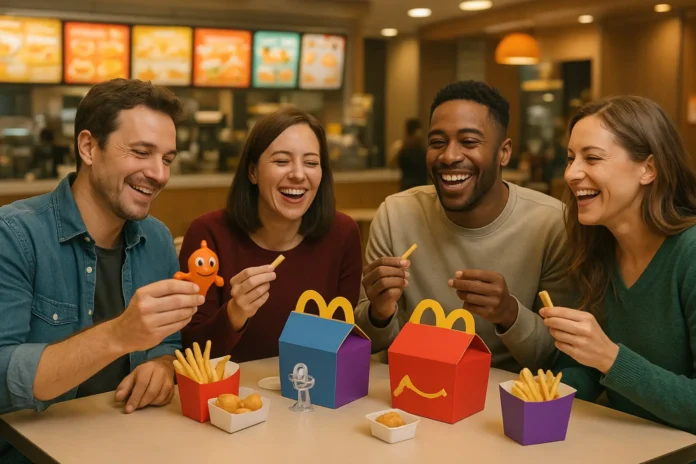
Nearly half of American adults admit to ordering kids’ meals at restaurants, turning what was once a child-exclusive option into a practical choice for grown-ups. A recent survey by Lightspeed Commerce found that 44% of adults have purchased kids’ meals, citing affordability, portion control, and simplicity as the biggest motivators.
This cultural and economic shift has been building for years. Market research from Circana shows adult orders of kids’ meals have increased by about 30% since 2019, even as overall restaurant traffic has slowed. With food away from home prices up 3.9% over the past year outpacing overall inflation smaller, cheaper meals are catching adult attention.
Classic children’s meals had always been priced and portioned to appeal to kids, and that’s still true to a degree. But these days, it’s the convenience and value of them that’s appealing to grown-ups. Pricing is a big factor here, with children’s meals typically ranging from $4 to $9far less than a full-size combo. A McDonald’s Happy Meal, for example, rings up around $5.99, which is less than many à la carte entrées cost. Practicality is a big part of the appeal for grown-ups, but nostalgia is another, and familiar childhood cuisine and collectible toys deliver an emotional appeal. Simple menus are another advantage, with children’s menus offering a limited, easy-to-decide appeal, and social media stars such as TikTok and Instagram having further fueled the appeal by presenting children’s meals as an astute “budget hack.”
Maleeka Hollaway, 35, from Atlanta, summed it up simply
“It’s economical and it’s filling.”
Others, like Orlando-based creative director Chauniqua Major, say the draw is portion size
“I don’t always want a giant meal. A kids’ meal feels just right.”
Fast-food chains have largely embraced the trend. McDonald’s recently revived nostalgia with its adult-targeted “McDonaldland Meal,” complete with retro packaging and toys. Wendy’s and Burger King are experimenting with bundled, value-oriented meals that echo kids’ menus but target adults.
A tweet from X.
Sit-down restaurants, however, remain cautious. Kids’ meals are less profitable, and some restaurants discourage adults from ordering them unless accompanied by children. Still, enforcement is uneven, and customer demand is hard to ignore.
Hospitality consultant Izzy Kharasch believes the shift doesn’t have to hurt restaurants:
“Smaller ticket sizes can still lead to higher customer frequency. People will come back if they feel they’re getting value.”
What started as a quirky social media habit is now a sign of deeper economic and cultural changes. Inflation has reshaped how people eat out, and kids’ meals once dismissed as off-limits to adults are being reframed as smart, sensible dining choices.
For restaurants, this means rethinking how value and portion size are marketed. For consumers, it reflects a broader move toward cost-conscious dining without sacrificing comfort or nostalgia.
As Hollaway put it
“Why spend more for food I won’t finish? A kids’ meal makes sense.”
The kids’ menu, it seems, has grown up because adults are ordering.

