

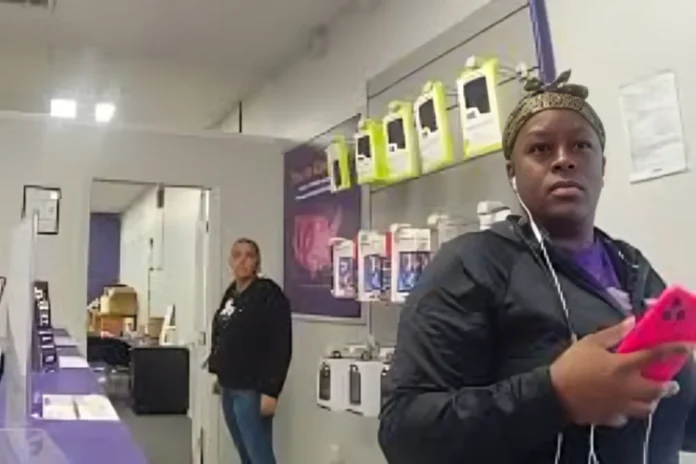
In a T-Mobile store in the United States, a routine phone setup escalated into a criminal investigation when employee Taylor allegedly transferred $400 from customer Paula’s Cash App account to her own. The event, documented in bodycam footage released on October 23, 2025, exposes vulnerabilities in digital transactions and raises questions about trust in retail customer service. This case, which quickly went viral, serves as a stark reminder of how easily personal devices can be exploited.
A tweet from X.
Bodycam footage captures Officers Torres and Johnson from the local police department approaching Taylor at the store.
“We’re over here investigating a theft with one of your clients that you helped with a phone,”
Officer Torres states. Paula, described as an older woman, had visited for help with app downloads, citing issues with her phone’s storage or SIM card. She handed over her unlocked device and stepped outside for a cigarette.
During that brief absence, Taylor reportedly accessed Paula’s Cash App and initiated the transfer, along with an unsuccessful attempt for an additional $500. Confronted with transaction records showing her name and photo, Taylor initially denies involvement:
“No, I didn’t do that.”
Officers point to the evidence:
“This is what was sent from her phone to your Cash App… $400 that went to your bank account on Cash App.”
They reference her prior convictions:
“This is your M.O. I looked up your jail history. You’ve been arrested for… fraudulent use of a credit card, identity theft, all of the above.”
The tension peaks when Taylor calls her mother, who questions her directly:
“Did it show that you cashed out yourself? Yeah, it was on my Cash App. Okay, well then you did that.”
Taylor agrees to return the money but is arrested for fraud and theft.
The video was posted by Raphouse TV on X, garnering over 59,000 views and highlighting Taylor’s ironic “employee of the month” status. Reactions ranged from shock to humor, with users commenting on the mother’s role and emphasizing digital risks:
“Cash App’s traceability enabled quick detection.”
Some responses included racial commentary, fueling debates on crime and trust.
This incident highlights employee ethics and device security in retail. Peer-to-peer apps process billions in transactions, but fraud persists. According to a 2022 CFPB presentation, 50% of P2P complaints were fraud-related, with FTC reporting $130 million in losses from payment appscamsin 2021. More recently, an AARP report noted bank transfers and payments as a top fraud method, with $1.8 billion in losses. In January 2025, the CFPB ordered Block, Cash App’s operator, to pay $175 million for fraud handling failures. Similar cases, including past T-Mobile frauds, call for enhanced protocols like supervised device access.
This story reveals the intersection of convenience and risk in digital life. As reliance on apps grows, stronger accountability measures from better employee screening to robust platform protections are crucial to safeguard consumers.
