The national football team of South Korea failed in the group stage of the FIFA World Cup 2026, resulting in an outrage among the citizens that has forced the coach of the team, Hong Myung-bo, to fly to Los Angeles only a few days after his arrival back home. Although the internet is abuzz with statements about him “escaping from the country,” in reality, there is more than just that going on.
However, Hong Myung-bo is still regarded with respect in South Korea because of his success in leading the Taegeuk Warriors to the fourth position during the FIFA World Cup in 2002 hosted in his country. Even after his failure in the group stage of the 2014 tournament, Hong Myung-bo was re-appointed as the manager in 2024, which was criticized for its lack of transparency.
Following their opening 2-1 victory over Czechia in Group A, South Korea was eliminated by Mexico and South Africa, recording only one win and finishing third in the group. In the crucial match against Africa’s second seed, Hong surprisingly left his captain and talisman Son Heung-min on the bench, a decision that triggered mass protests back home. The early exit, which marked South Korea’s worst result since the tournament’s expansion to 48 teams, is under scrutiny for potentially damaging the squad’s morale.
Hong resigned shortly after the elimination.
“I take full responsibility,”
He said in a press conference, apologizing to the nation.
Fans expressed fury over tactical choices, player selections, and perceived favoritism. Reports described heavy police presence at Incheon around 160 officers after online death threats, including one from a self-described American citizen. Some businesses displayed “no entry” signs for Hong, and social media overflowed with criticism. Korean outlets noted the extreme cultural pressure placed on national team coaches.
President Lee Jae-myung publicly criticized the appointment process as rooted in “loyalty and factionalism” rather than competence. He also demanded an investigation into the KFA and the preparation of the national team. It has grown into bigger controversies concerning the governing of football in South Korea.
The authorities are examining the coaching selection process for 2024 for any possible procedure violations and intervention. A civic group filed a complaint naming Hong. While President Lee ordered a probe into the World Cup failure and KFA operations, reporting indicates these focus on administrative issues rather than criminal liability for match results.
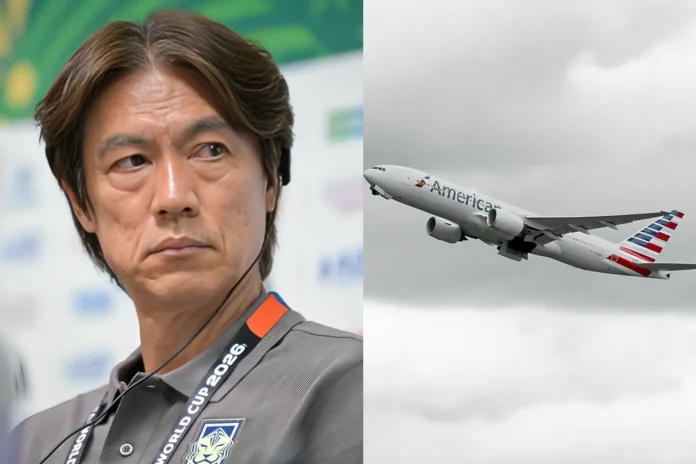
Social media posts, including one from Pubity featuring Hong’s portrait and an American Airlines plane, amplified the “fled for safety” narrative. Reputable news sources from Korea and abroad (Yonhap, Reuters, Chosun) corroborate the essential details but interpret Hong’s journey to America not as an escape but simply as a personal visit under difficult circumstances. The context is important here as the football culture of South Korea puts great pressure on its team.
The KFA faces scrutiny and potential hearings. President Lee has pushed for reforms. Hong has said he has “things to say” that will emerge later. His resignation highlights the volatile intersection of sports, politics, and social media in modern football. For now, South Korean football searches for stability after another painful chapter.