

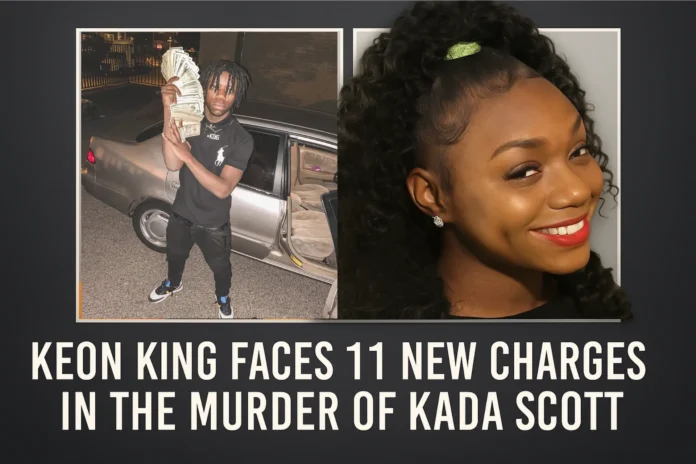
What begins as a casual text exchange between old acquaintances can spiral into unimaginable tragedy, as Philadelphia authorities now reveal in the case of a promising young woman’s untimely death.
Kada Scott, a 23-year-old nursing student from the Mount Airy neighborhood, vanished on October 4, 2025, after leaving her overnight shift at a local senior living facility. Just two weeks into the job that she hoped would pave her way to a brighter future, Scott stepped into a dark SUV parked outside her workplace around 10 p.m. that night. Surveillance footage and cellphone records later painted a grim picture: she met up with 21-year-old Keon King, a man she knew from prior encounters, in what prosecutors describe as a planned rendezvous gone horribly wrong.
On October 18, hikers stumbled upon Scott’s remains in a shallow grave tucked behind the overgrown woods of an abandoned middle school in Northeast Philadelphia’s East Germantown section. The discovery, confirmed through DNA testing the next day, shattered her family and ignited a swift investigation. Now, King faces 11 additional charges in connection with her homicide, announced this week by the Philadelphia District Attorney’s office. These include first-degree murder, robbery, theft, multiple firearms violations under Pennsylvania’s Uniform Firearms Act, possessing an instrument of crime, tampering with evidence, abuse of a corpse, conspiracy, and obstruction of justice.
The charges build on King’s initial arrest on October 14 for kidnapping and related offenses tied to Scott’s disappearance. Court documents detail a chilling timeline: text messages from days earlier, including one from Scott saying
“kidnap me again”
in what investigators believe was playful banter rooted in their shared past, led to a flurry of calls that evening. Cellphone pings were placed both at the wooded site shortly after, where authorities allege Scott was shot and her body hastily concealed. A stolen Hyundai Accent, later found torched in a nearby alley, served as the getaway vehicle. At the same time, King’s gold Toyota Camry repeatedly appeared on video feeds near the crime scene during the frantic following hours.
This is not King’s first brush with the law. Earlier this year, he faced accusations of kidnapping and strangling another woman in a separate incident, charges that were dropped when the victim failed to appear in court. He posted $20,000 bail and walked free, a decision that has reignited fierce debates over Philadelphia’s approach to pretrial detention. King, an emerging rapper from Philly known for his flashy social media posts showcasing a street-hustler persona, had been building a local following in the city’s underground hip-hop scene before his arrest halted any momentum.
King, held without bail at $2.5 million, remains in custody as detectives hunt for potential accomplices hinted at in conspiracy counts. Evidence from his Germantown apartment, including ammunition and gloves, bolsters the firearms allegations, while the burned vehicle points to deliberate cover-up efforts. Scott’s loved ones, still raw from the loss, have poured their grief into action. A memorial fund launched by the family seeks to honor her memory through funeral costs and community healing initiatives, drawing thousands in donations from strangers moved by her story of quiet determination.
As Philadelphia mourns yet another life cut short, the pursuit of justice for Kada Scott serves as a stark reminder of the human cost behind every statistic. Her family urges anyone with tips to come forward, echoing a broader plea for a safer city where young dreams are not buried in forgotten woods. The road ahead includes King’s arraignment and ongoing probes, but for now, the focus stays on remembrance and resolve.

In my view as someone who has covered the city’s justice system for years, these cases underscore a painful tension: reforms aimed at reducing cash bail’s burden on low-income defendants have merits, yet they risk leaving communities vulnerable when repeat risks slip through. Data from the Philadelphia Police Department shows the city grappling with persistent violence, with homicides ticking upward amid broader national declines reported by federal trackers. Balancing equity with public safety demands more than policy tweaks; it calls for robust victim support and swift accountability to prevent cycles like this one.