

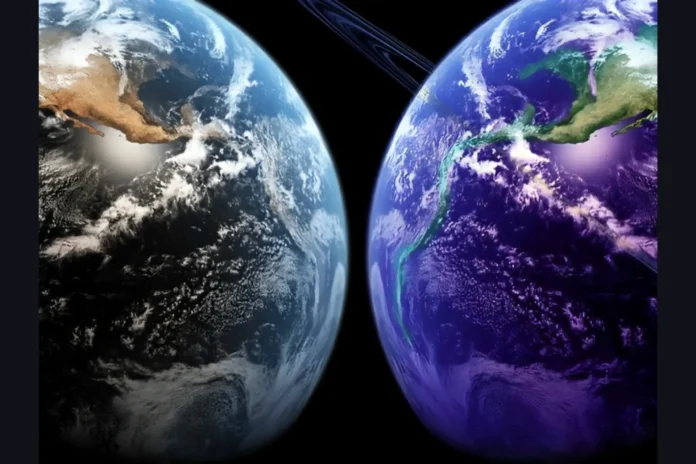
Social media has a way of turning distant cosmic news into something that feels immediate and thrilling. Take the X post from @DailyLoud on November 3, 2025 it’s brought back all the excitement around Gliese 12 b, this Earth-sized planet that scientists first announced back in May 2024. With more than 360,000 views already, the post paints it as a spot that might even have oceans and support life, leading folks to call it our “second Earth.” You’ve got people in the comments dreaming about trips across the stars, while others crack jokes about Earth’s messes, like one guy asking if there’s “weed” out there. It’s clear everyone’s looking for a bit of escape right now, mixing real wonder with the usual internet buzz.
A tweet from X.
But let’s get down to facts. Gliese 12 b’s story is rooted in good, hard science. Astronomers from two separate groups spotted it through NASA’s TESS satellite, which catches planets by watching for those tiny blips in a star’s light when something crosses in front. Then the ESA’s CHEOPS stepped in to confirm everything. This world is sitting 40 light-years off in Pisces, circling a dim red dwarf star called Gliese 12 every 12.8 days. A study from May 13, 2024, in the Monthly Notices of the Royal Astronomical Society puts its size at roughly 0.96 times Earth’s. The surface might hit about 42°C-or 107°F-which isn’t too bad, it could mean liquid water if there’s an atmosphere to balance things out. Shishir Dholakia, the lead from the University of Southern Queensland’s Centre for Astrophysics, described it as
“a prime candidate for habitability studies,”
pointing out its rocky build and spot in the habitable zone.
One thing to clear up, though that image in the viral post, the one with a couple of blue planet look-alikes? Pure artwork, not an actual snapshot. We can’t snap photos of planets this far out yet, so these pics just help us visualize. It’s important to point that out as reporters, to keep things from getting overhyped. Models hint at stuff like a nitrogen-heavy atmosphere that might hold water, but nothing’s proven. This ties into bigger ideas about staying smart online excitement’s great, but it can muddle what’s real.
People reacting to the @DailyLoud post show everything from pure amazement to doubt. There’s humor in how we prioritize, like a comment saying it
“underscores ongoing public intrigue in exoplanets amid Earth’s challenges.”
Wild guesses about aliens pop up too, but solid reporting sticks to what’s checked out. And watch for mix-ups with other planets, say TRAPPIST-1e—another Earth-ish one 40 light-years out, with JWST hints at atmospheres, but totally different setup.
What really matters about Gliese 12 b is the science it could unlock. An October 2025 paper in the Monthly Notices of the Royal Astronomical Society nailed its mass at about 3.87 Earth masses, leaning more toward a Venus-style makeup than some puffy gas ball. That sets it up as a perfect “exo-Venus” to study why planets go wrong or right Venus boiled over, Earth didn’t. JWST checks planned for late 2025 will hunt for signs like methane or water vapor in the air. Larissa Palethorpe, a PhD student splitting time between the University of Edinburgh and University College London, put it this way
“If it has a thick atmosphere like Venus, it might be inhospitable; a thin, Earth-like one could suggest habitability.”
These finds keep pushing us to look outward, but remember, science doesn’t rush like social media does. While we wait on those JWST findings, Gliese 12 b shows the cosmos is full of puzzles that need steady work, not just hype. For details on that mass study, head over to the Royal Astronomical Society’s page.
