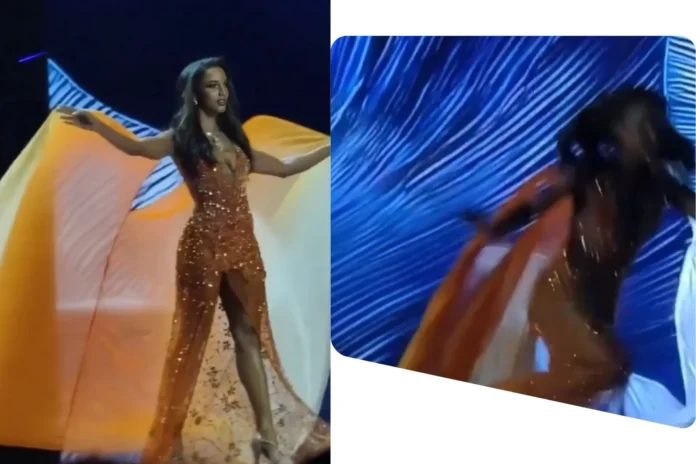
What started as a graceful strut down the runway ended in a heart-stopping plunge for Gabrielle Henry, leaving the world wondering about the hidden hazards of pageant perfection. The 28-year-old Jamaican ophthalmologist misstepped during the evening gown preliminary round on November 19 in Bangkok, Thailand, when she pivoted backward after her walk and missed the stage edge, tumbling into a roughly four-foot drop. Witnesses described the moment as sudden and accidental, likely due to the combination of high heels, dim lighting, and the runway’s design that concealed the gap from view. Videos show stagehands in black uniforms rushing to her side within seconds, followed by paramedics who carefully assessed her before placing her on a stretcher, securing her with straps, and wheeling her offstage amid dimmed lights and audience murmurs of concern.
Henry, known for her work as an eye doctor and founder of the See Me Foundation, which aids vision care in Jamaica’s underserved areas, has used her platform to advocate for health equity. She entered the Miss Universe competition as a former Miss World Caribbean, blending her medical expertise with a passion for empowerment. This background made her a standout contestant, inspiring many with her story of resilience and service beyond the spotlight. While Henry herself has not issued personal statements amid her recovery, her sister, Dr. Phylicia Henry-Samuels, shared that Gabrielle appreciates the outpouring of support but remains focused on healing.
Three days post-incident, Henry stays in the intensive care unit at Paolo Rangsit Hospital, where doctors report no broken bones or immediate life-threatening issues. Yet, her progress falls short of expectations, requiring at least seven days of specialized monitoring. Family members, including her mother and sister, are by her bedside, providing updates that emphasize steady treatment and a call for privacy to avoid added stress. The Miss Universe Jamaica organization echoed this sentiment, requesting global prayers while confirming her withdrawal from the competition due to the severity of the injury. These details highlight the emotional toll on loved ones navigating public scrutiny during a private health crisis.
With Henry’s absence, the Miss Universe finals proceeded on November 20, culminating in Mexico’s Fatima Bosch being crowned the winner, a moment marked by her earlier stand against pageant-related bullying that resonated widely. The event continued without further disruptions, focusing on themes of unity and diversity among the remaining delegates. Organizers have since reiterated their commitment to contestant well-being, though no immediate changes to protocols were announced. Bosch’s victory marks a fresh chapter in the pageant, with her advocacy for inclusivity poised to define her reign.
Such falls underscore ongoing concerns about pageant safety, where elaborate setups and performance pressures can lead to avoidable risks, as evidenced by past incidents outlined in resources like the Pageant Planet guidelines. In my experience reporting on entertainment events, these moments reveal the human side of high-profile competitions, prompting calls for better edge markings, rehearsal emphases, and medical readiness. Prioritizing prevention could safeguard future participants, turning lessons from Henry’s ordeal into lasting improvements for the industry.