Former agent of U.S. Border Patrol’s legal battle at federal level has revealed an odd pipeline that connects the legally protected sea cucumbers of Mexico to chemical manufacturers in China who produce synthetic drugs.
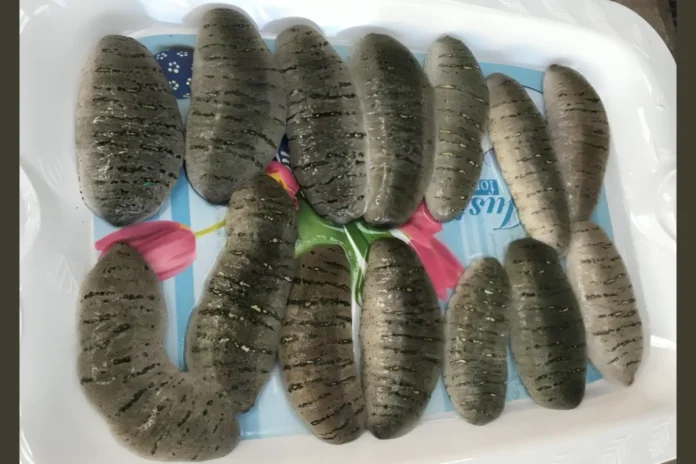
Cesar Daleo, who served with the Border Patrol from 1992 to 2003 in the San Diego area, arranged for bags of dried Isostichopus fuscus the only Mexican sea cucumber species protected under CITES to be smuggled from Mexico into the United States on at least 80 occasions between fall 2014 and fall 2016. Federal prosecutors said the shipments were worth more than $250,000. He also admitted involvement with seahorses.
In August 2017, authorities arrested Daleo near the San Ysidro border as he tried to drive into Mexico with a package he believed contained 1 kilogram of 4ANPP, a key fentanyl precursor. Investigators had intercepted the real chemical hidden in a lotus-root starch shipment from China at Los Angeles International Airport, substituted a harmless powder, and monitored the delivery to a San Ysidro post office box. Daleo had signed for similar packages about 13 times before. In 2019, U.S. District Judge Gonzalo Curiel sentenced him to 30 months for the drug conspiracy and 24 months concurrent for the wildlife smuggling conspiracy. He was also ordered to pay restitution to Mexican environmental authorities.
The dried sea cucumbers sell at a very high price in Asian markets, particularly China. The reason is they are considered a luxury food item which is consumed by rich people during their banquets and also have some medicinal values associated with them. They can sell at the rate of up to $3,000 per kilogram.
A recent Foreign Policy investigation described how elements of Mexican organized crime groups, including those linked to the Sinaloa Cartel and to a lesser extent the Jalisco New Generation Cartel, have moved into illegal harvesting of sea cucumbers in areas such as the Yucatán Peninsula and Baja California. Chinese networks have accepted the dried product in some transactions as payment for chemical precursors used in methamphetamine and fentanyl production. Brookings Institution expert Vanda Felbab-Brown has noted that high-value wildlife products can help criminal networks bypass monitored financial systems.
Overexploitation has led to a depletion of sea cucumber populations. While Mexico shut down its sea cucumber fisheries as legal operations in certain areas by approximately 2019, the trade was sustained in the black market with increasing involvement of criminal organizations. The ecological significance of sea cucumbers lies in their contribution towards nutrient cycles on the ocean bottom, known as the “earthworms of the sea.”
The Daleo case serves as one example in which this valuable marine creature was used in a different way in comparison to drug precursors, transported across the US-Mexico border.