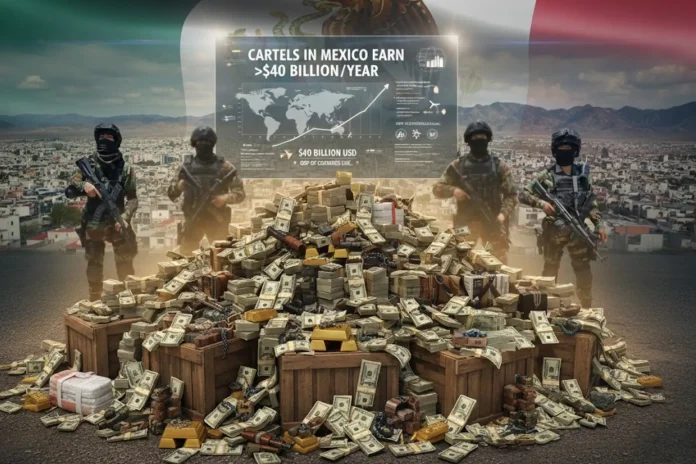
Mexican cartels generate more than 40 billion dollars per year according to upper range estimates from law enforcement assessments. This economic power exceeds the gross domestic product of more than 60 countries and territories worldwide. The massive revenue has sharpened a serious clash with the United States fueled by the deadly fentanyl crisis that claims tens of thousands of American lives each year as the leading cause of death for those under age 45. Families on both sides of the border suffer the consequences through violence addiction and lost loved ones with recent events amplifying the stakes even further.
These organizations build their wealth primarily through large scale production and trafficking of synthetic drugs combined with theft of oil and other valuable resources. They utilize advanced technology surveillance and paramilitary tactics to safeguard their operations across regions. Government alerts on smuggling schemes document billions lost annually to fuel theft alone while United States drug threat assessments outline the dominance in supply chains reaching American streets. Global economic projections confirm the cartel totals above entire budgets of many smaller nations.
Such resources equip these groups with tools that complicate enforcement efforts on both sides of the border. The United States has responded forcefully by designating several leading cartels as foreign terrorist organizations since February 2025 which enables broader sanctions and legal tools against supporters. Mexican authorities continue extraditions of suspects but firmly oppose any direct foreign intervention to preserve national sovereignty. Yesterday the Mexican army eliminated a high profile cartel leader with United States intelligence support triggering an outburst of retaliatory violence including roadblocks and fires across multiple states.
What might unfold if tensions intensify includes risks of heightened cartel retaliation through intensified drug flows or violent outbursts that could claim more civilian lives in Mexico and increase overdose incidents in the United States. Direct United States actions might also damage vital trade partnerships and diplomatic ties between the two neighbors affecting workers and businesses reliant on stable relations. On a more hopeful note closer collaboration on financial sanctions intelligence sharing and public health programs might weaken cartel influence without triggering wider conflict and place everyday safety at the center.
Solutions must keep the safety and wellbeing of everyday people at the center of all decisions. Expanding access to addiction treatment creating legitimate jobs in at risk communities and supporting local resilience programs can help cut off the demand and recruitment pipelines that sustain these groups. Both governments carry the responsibility to pursue balanced strategies that deliver real protection for citizens. With coordinated international action grounded in respect and shared goals there remains a viable path toward reducing the harm caused by these powerful criminal enterprises while safeguarding families and communities on both sides of the border.