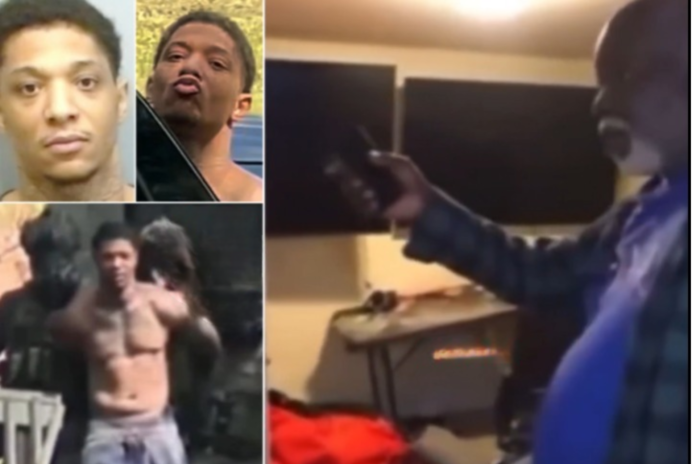
A single heated argument in a dimly lit basement turned a fugitive’s sanctuary into his undoing, exposing the raw underbelly of trust and survival on the run.
Derrick Groves, the 28-year-old New Orleans convict who slipped away from jail in May, spent his final days free crammed into a modest rental home on Honeysuckle Lane in southwest Atlanta. The property owner, Richard McQueen, could hardly believe the chaos that unfolded there when he returned from out of town. He walked through the shattered remnants with a local reporter, his voice laced with disbelief as he pointed out the tear gas canisters still scattered across the floor and the jagged hole in a basement wall where SWAT teams had blasted their way in. McQueen shook his head, astonished at how the ambush happened so swiftly, with officers deploying dogs and gas to smoke out the hidden man without a single shot being fired.
The raid kicked off around noon on October 8, after a tipster called in Grove’s exact location. Investigators later pieced together that the caller was a young woman Groves had been staying with, someone close enough to share the cramped space but fed up enough to claim the $50,000 reward from Crime Stoppers. Their spat reportedly boiled over the night before, leaving her to weigh loyalty against a life-changing payout. She stuck around during the standoff, watching Groves emerge shirtless from a fortified crawl space he had rigged with nailed-up boards and buckets for the long haul. Police hauled away 15 pounds of marijuana and a pistol from the scene, hinting at side hustles that kept the pair afloat.
Grove’s story started back in the Big Easy, where a jury nailed him last fall for two Mardi Gras murders in 2018. He was awaiting sentencing in the Orleans Parish Justice Center when he and nine others busted through a wall using a smuggled tool, dropping down pipes to freedom. For nearly five months, he bounced between states, dodging tips from club goers and supermarket shoppers until Atlanta became his last stop. The U.S. Marshals Service led the chase, coordinating with local SWAT to wrap it up clean.
By Thursday morning, October 9, Groves faced a judge in Fulton County court for his extradition hearing, his first taste of the system since the bust. He waived his rights without hesitation, telling the room he wanted to go back where he belongs, back to New Orleans to face the music. Transport crews whisked him south that same day, landing him behind bars again by Friday evening.
This capture hits a different note when you consider the human threads pulling at it all. Fugitives like Groves don’t vanish into thin air; they lean on people, and those bonds snap under pressure every time. Programs like Crime Stoppers prove it, with tips leading to over 782,000 arrests nationwide since they started, turning whispers into justice without putting callers at risk.
Reminds us that one voice, even from the shadows of betrayal, can rewrite endings for communities still healing from the violence left behind. For young folks scrolling through stories like this, it’s less about the drama and more about the choice: stay silent or step up when it counts.