

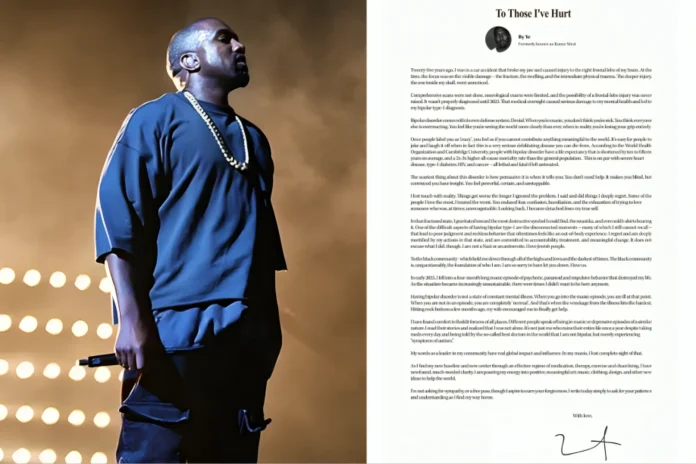
Ye has issued a public apology for his past antisemitic remarks, publishing a full-page open letter in The Wall Street Journal on Sunday (Jan. 26) in which he expressed remorse and attributed his behavior to untreated bipolar disorder and a long-undiagnosed brain injury.
The letter, titled “To Those I’ve Hurt” and paid for by his Yeezy brand, marks the artist’s most extensive apology to date. “I regret and am profoundly ashamed of my actions,” Ye wrote. “I am not a Nazi or an antisemite. I love Jewish people.”
In the statement, Ye said his antisemitic outbursts — particularly during a prolonged manic episode in 2025 — stemmed from a combination of bipolar I disorder and frontal-lobe damage sustained in his near-fatal 2002 car accident. He said the injury went undetected for years as doctors at the time focused on his visible physical trauma, including his shattered jaw, and that the neurological impact was not fully identified until 2023.
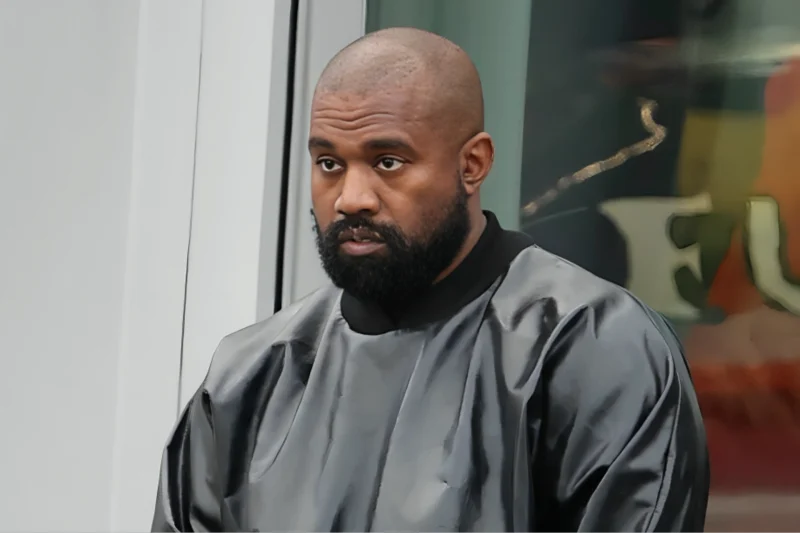
Ye said the untreated conditions led to impaired judgment, paranoia and detachment from reality, culminating in what he described as reckless and destructive behavior. During that period, he publicly declared himself a Nazi, expressed admiration for Adolf Hitler, released a song titled “Heil Hitler” in May 2025 and sold merchandise featuring swastikas through his Yeezy platform — actions that prompted widespread condemnation and the shutdown of his online store by e-commerce partners.
“I am mortified by the pain I caused,” Ye wrote, adding that he takes responsibility for the harm inflicted on the Jewish community. He also extended an apology to the Black community, saying his manic behavior damaged his credibility and influence and referencing earlier controversies that strained his relationship with fans and peers.
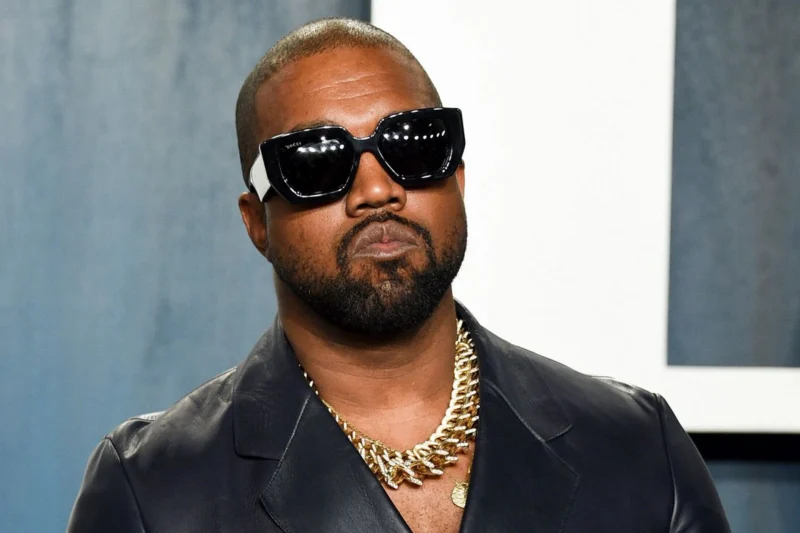
While emphasizing that mental illness does not excuse his actions, Ye said it helps explain them. He pledged to remain in therapy, adhere to prescribed medication and avoid triggers, committing to accountability and long-term change rather than asking for immediate forgiveness.
The apology arrives after years of antisemitic statements beginning in 2022 that led to Ye losing major business partnerships, including his lucrative deal with Adidas. Previous attempts at reconciliation included a 2025 meeting with Rabbi Yoshiyahu Yosef Pinto and an apology posted in Hebrew on Instagram, both of which were met with mixed reactions.
The Anti-Defamation League responded by calling the statement “long overdue,” while stressing that it does not erase Ye’s history of antisemitism and urging that the apology be followed by consistent actions and an end to harmful rhetoric.
Public response has been divided. Some have praised the letter as one of Ye’s most self-aware and detailed acknowledgments of his behavior, while others have questioned the timing, noting that the apology was published just days before the release of his upcoming album, scheduled to arrive on Jan. 30. The move mirrors past moments in Ye’s career in which public contrition coincided with album rollouts, fueling skepticism about his intentions.
Whether the Wall Street Journal ad represents a turning point or another chapter in a long cycle of controversy and reconciliation remains to be seen.

 releases a letter apologizing for his past anti-Semitic behavior, attributing it to a manic episode in 2025. Read the full statement.)