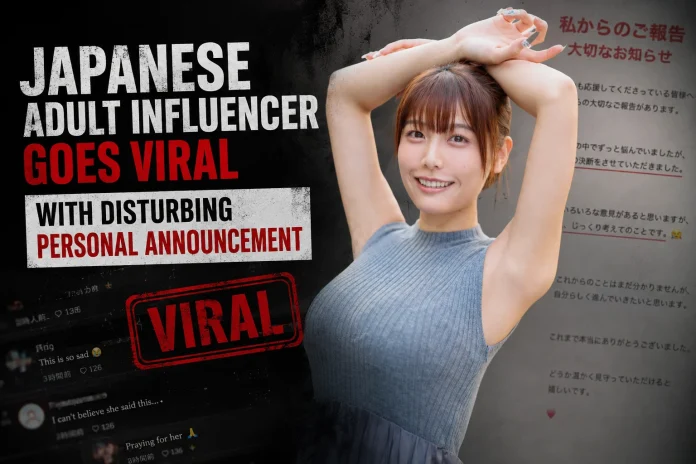
Japanese adult creator Rurutan never planned a career. At 19 she entered Tokyo’s delivery-health circuit with one goal: earn back the ¥20 million her parents had spent on her, then end her life.
She is 27 now, with 1.3 million followers across platforms, a string of photo books, self-produced videos that have cleared eight figures, and a new business title co-written with Osamu Suzuki. The work that was meant to finance her exit is the reason she is still here.
Born August 20, 1999, Rurutan grew up in a snowy part of Japan she still declines to name. Childhood asthma kept her close to home. She filled the days with lessons: swimming, abacus, Kumon, tennis, trampoline, karate, then softball through middle and high school. By the end of junior high her chest had developed to an F-cup. By graduation it was an H-cup. One middle-school train ride stuck with her. A man across the aisle masturbated while staring at her and her teammates. She still remembers the stain spreading on his red jersey. That moment, and the sudden attention from male classmates, taught her early that her body carried a price.
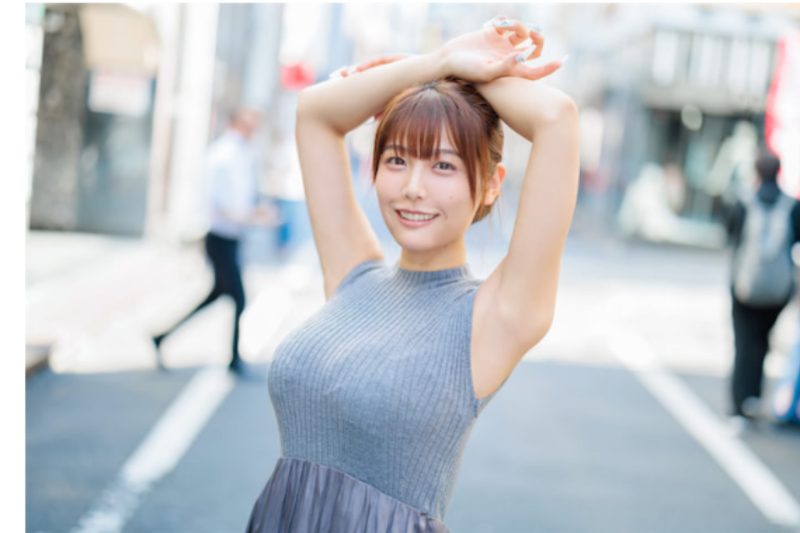
In 2018 she enrolled in a Tokyo university law department, excited enough to ask for the full set of Japan’s legal codes as a birthday gift. The work proved dryer than expected. By her third year she was drifting toward intellectual property. At the same time her mental health bottomed out. “I thought there was no point in living anymore,” she told writer Akira Tachibana in a Nikkan Spa! interview published August 29. “I decided to repay the 20 million yen my parents had spent on me up to that point, and then die.”
She needed cash fast. In September 2019, short about ¥30,000 during exam week, she answered an ad for a Shimbashi delivery-health parlor run by the Yumeoto Group and started work. The early months surprised her. Rurutan has always chased approval. Clients who asked for her by name and came back satisfied that hunger. The suicidal pressure eased.
COVID shut the Shimbashi shop. She moved to a busier parlor in Kabukicho, the neon heart of Shinjuku’s red-light district. The pace was different. Women mixed parlor shifts with street work and sugar-daddy arrangements. Rankings decided pay. Rurutan stopped looking for affection and started treating the job like a numbers game. She noticed that draining a client in two expensive sessions was short-sighted. Better to keep them coming back for months. The approach worked. She held the No. 1 ranking for 18 straight months and entered the shop’s hall of fame.
She also figured out social media early. Existing clients were told to engage with her on X. The activity fed the algorithm. Her following jumped past 10,000, giving her leverage for better cuts from management. Rates rose with the ranking. Early take-home sat around ¥8,000 an hour. Later she charged ¥40,000 and stayed booked two or three months out, clearing roughly ¥3 million a month. Eventually the rate hit ¥200,000 an hour.
By 23 the schedule felt tight. She launched fan platforms, first Fantia in August 2023, then myfans, and began releasing her own short adult videos. A four-minute clip priced at ¥10,000 sold about 600 copies. Later releases at higher prices did far better. One ¥30,000 video is reported to have generated more than ¥120 million in profit. She preferred the independent route. Mainstream AV, she has said, leaves a permanent digital mark she wanted to avoid.
Today the numbers keep climbing. Combined followers sit at roughly 1.3 million. She has released photo books, appeared in magazines, and continues limited parlor work. The new book with Suzuki frames her approach as the practical use of what Japanese writers call eros capital: turning physical appeal into steady income without burning the source. She has little interest in spending the money. For her it remains a clear scorecard, the kind of ranking she understood in school and lost once university grades grew murky.
Rurutan still talks about building support systems for other women in the industry. The original plan never changed in her telling. Repay the debt. Then die. The work that was supposed to pay for the ending supplied both the sense of being needed and the measurable success that made the ending unnecessary.