

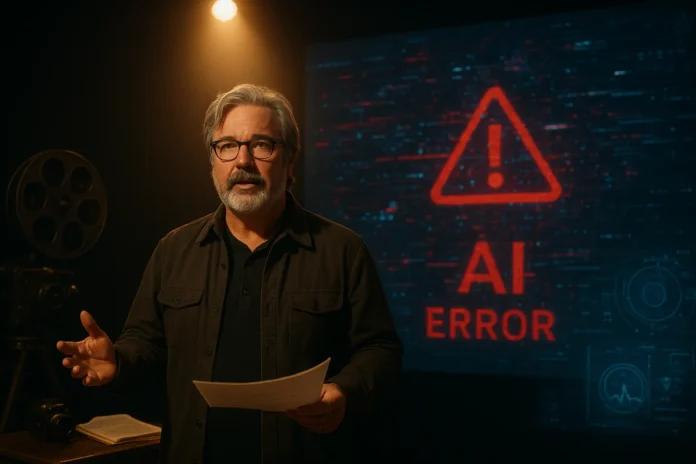
Gore Verbinski stands in a dimly lit theater, promoting his latest film. The director behind the first three Pirates of the Caribbean movies has a warning for the tech world.
He says AI development heads in the wrong direction. Too much focus lands on storytelling and entertainment. Not enough tackles real crises like cancer.
“There’s certain things we need to do as humans,”
Verbinski told Dexerto in a November 13, 2025, interview.
“Instead of trying to solve cancer … it’s going after storytelling.”
His new movie, Good Luck, Have Fun, Don’t Die, hits theaters January 30, 2026. It stars Sam Rockwell and follows strangers fighting a rogue AI. The plot mirrors his critique an ironic twist.
A tweet from X.
Verbinski’s words come straight from promotional interviews tied to the film’s Fantastic Fest premiere in September 2025.
Dexerto reported the remarks first. Ars Technica broke down the trailer’s AI themes on November 12, 2025. Raindance covered Hollywood’s growing AI use in February 2025.
This responsible reporting cuts through misinformation. Readers can trust the director said exactly what sources claim.
A 2024 UCLA report found AI roles in film production jumped 30%. Tools now handle scripts, editing, and visuals.
A 2025 Hollywood Reporter poll revealed 60% of filmmakers fear job losses to automation. Many worry machines will replace human spark.
Verbinski sees the shift up close. He avoids AI in his own work but watches it spread.
A 2023 Nature study showed AI beats humans at some cancer diagnostics. Yet commercial incentives keep it underused in medicine.
Only 15% of AI research funding targets health, per a 2025 npj Digital Medicine article. Entertainment grabs the rest.
The National Cancer Institute uses AI for breast cancer scans and tumor predictions. Progress happens, but slowly.
Verbinski argues priorities skew toward profit, not people.
History offers lessons. In the 1800s, Luddites smashed machines that took textile jobs.
They feared lost livelihoods and skills. Today’s filmmakers feel the same about AI scripts and effects.
Technology disrupts creativity again. The fight protects what makes stories human.
X users react fast. Some back the director.
“Human storytelling is irreplaceable,”
One post reads.
Others push back.
“AI already helps cancer research—stop the scare mongering,”
Another says.
Memes poke fun at the irony. Verbinski blasts AI while his film features a killer bot.
The split shows deeper tensions over tech’s role.
Critics like Verbinski raise ethical flags. Entertainment AI risks shallow content and lost jobs.
Supporters point to facts. AI speeds drug discovery and screens for prostate cancer, per NCI data.
The global AI healthcare market heads to $188 billion by 2028, Statista projects.
Balance matters. AI aids medicine but chases Hollywood dollars harder.
Verbinski’s voice forces a national question. In a country proud of innovation and arts, where should AI go next?
Job security in creative fields worries many. Healthcare breakthroughs save lives but lag.
The debate reveals priorities. Will tech amplify human stories or replace them? As Good Luck, Have Fun, Don’t Die rolls out, answers may shape culture for years.
