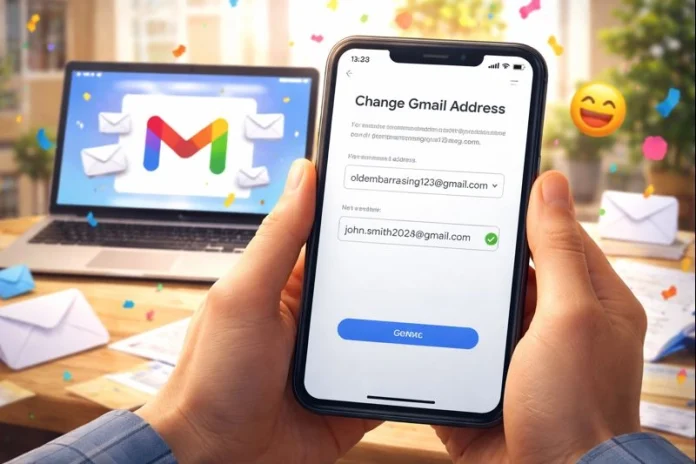
Google has begun rolling out a long-requested update that allows Gmail users to change their primary @gmail.com address without losing access to their existing account, emails or stored data.
According to Google support documentation and reporting from Forbes and 9to5Google, the feature began appearing quietly in late December, initially on Hindi-language support pages, suggesting an early phased rollout. The update lets eligible users replace an old Gmail username with a new one while keeping the same Google account intact — a move that addresses a complaint users have raised for years.
Under the new system, users can choose a fresh @gmail.com address, as long as it’s available. All existing emails, contacts, Google Drive files, photos, subscriptions and purchases remain unchanged. The original Gmail address is retained as an alias, meaning messages sent to the old address will still arrive in the same inbox, and users can continue signing in with either address.
The newly selected email becomes the account’s primary identifier and default login, though Google notes that some legacy references — such as older Calendar events — may temporarily continue displaying the original address.
Google has also placed several restrictions on the feature. Users cannot change their Gmail address again for 12 months, and reports indicate there is a lifetime cap on the number of changes per account. The new address cannot be deleted, and the original username remains permanently tied to the account, preventing others from claiming it. The option is currently limited to personal Google accounts ending in @gmail.com and does not apply to work or school accounts managed through Google Workspace.
For many longtime Gmail users, the update offers a long-overdue fix. Gmail launched more than two decades ago, and millions of early adopters chose usernames that no longer reflect their professional or personal identities. Until now, changing a Gmail username meant creating an entirely new account or abandoning years of stored data.
Reaction online has been swift — and amused. Screenshots of the feature circulating on X prompted waves of jokes from users eager to finally retire embarrassing or outdated email handles, with some calling it a long-overdue “digital rebrand.”
Google has not provided a firm timeline for full availability, noting the feature is rolling out gradually. Users can check for access by visiting their Google Account settings under Personal Info and Email.
For those who see the option, Google’s advice is implicit: choose wisely. Once the change is made, the new address is here to stay — at least for the next year.