

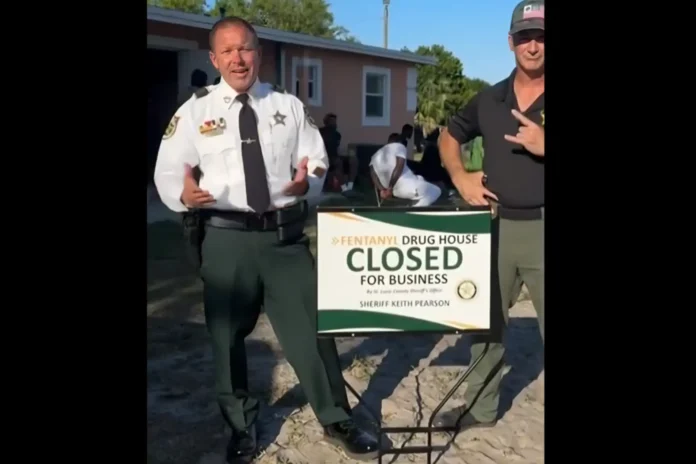
In a sun-soaked Florida driveway, a sheriff hoists a handmade sign declaring a drug house shut down for good, while the very suspects he just busted mutter curses just feet away. The 34-second TikTok clip from St. Lucie County Sheriff Keith Pearson captures the raw edge of law enforcement in the social media age, blending official grit with viral flair. Posted on November 5, 2025, it has ignited debates across the nation about where transparency ends and spectacle begins.
Pearson, dressed in his crisp green uniform, explains how his team wrapped up a four-month probe into fentanyl peddlers with help from SWAT units and partner agencies. The arrests targeted traffickers moving fentanyl alongside cocaine and methamphetamine through a modest pink trailer home turned distribution hub. At least four men now sit bound on the sandy ground, their frustrated outbursts, such as “they tryin to make a video,” cutting through the sheriff’s steady voice, turning the announcement into unintended street theater.
Within hours, the video went viral on platforms like X and Instagram, garnering thousands of shares and comments that ranged from cheers to eye rolls. Viewers praise the direct hit at Florida’s opioid crisis, where fentanyl overdose deaths claimed over 70,000 lives nationwide last year alone. Yet others cringe at the suspect’s raw defiance, stealing the spotlight, questioning if the format prioritizes likes over justice.
This is not Pearson’s first rodeo with camera-ready busts; he launched the style early in 2024 to spotlight narcotics raids and invite fugitives to surrender. Clips from car chases to warrant serves racked up millions of views, boosting the St. Lucie County Sheriff’s Office profile on TikTok. Supporters credit the tactic with sparking public tips that led to more arrests, proving social media can humanize cops in tough neighborhoods.
Pearson stood firm in the video.
“I’m St. Lucie County Sheriff Keith Pearson.”
He continued.
“We just concluded a four month investigation targeting those peddling fentanyl in our community.”
Adding emphasis, he stated.
“Today, with the help of SWAT teams and other agencies, the investigation wrapped up with arresting these individuals trafficking fentanyl, trafficking cocaine, and trafficking methamphetamine.”
He drove home the department’s mission.
“Right now, our main goal as sheriff is to take narcotics off the street.”
Gesturing to the sign, Pearson delivered his closing message.
“And our message to criminals is this: Drug house closed for business. Not in St. Lucie.”
These words, paired with the scene’s backdrop of defiance, fueled the clip’s rapid spread.
Critics, however, point to a trail of pushback that started with a federal prosecutor’s letter in June 2024, warning that taunting videos could taint trials and strain partnerships. Pearson’s approach even clashed with Florida’s statewide TikTok restrictions for government devices, yet he persisted, arguing that it effectively deterred dealers. The backlash peaked during his reelection bid, with calls for more restraint echoing concerns over professionalism in policing.
From my vantage point, covering law enforcement trends, these videos highlight a double-edged sword: they build community trust through unfiltered access, as studies show that an active online presence can strengthen public bonds. However, they also risk eroding that trust if perceived as mocking the vulnerable, according to guidelines from experts on ethical digital practices. Balancing the two demands requires clear policies that keep the focus on safety, not showtime.
As Pearson transitions to a federal role with the Department of Homeland Security, his legacy prompts agencies nationwide to rethink their feeds. Will more sheriffs follow suit in terms of engagement, or dial back amid the scrutiny? In St. Lucie and beyond, one thing rings clear: the conversation on cops and clips is just heating up.
For more on social media’s role in policing, explore strategies for building trust through digital outreach.
