

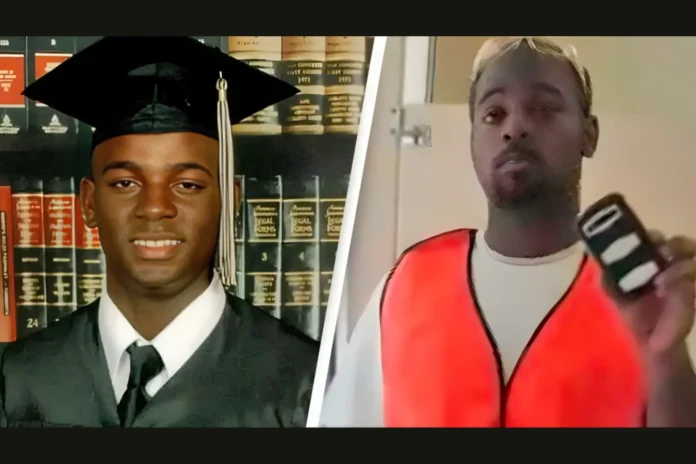
On the morning of August 16, 2012, Lawrence Daquan “Day” Davis pulled on an orange safety vest and clear protective glasses at the Bacardi Bottling Corporation plant in Jacksonville, Florida. Just 21 years old, he was starting his very first shift as a temporary worker, placed there by Remedy Intelligent Staffing. Before work began, he snapped a selfie in his gear and sent it to his fiancée, Alicia, who was pregnant with their first child.
“He was proud,”
Alicia later recalled.
“It was the start of a new chapter for us.”
Ninety minutes later, Davis was dead.
That morning, a palletizer machine designed to stack cases of rum bottles jammed, shattering glass. Davis was asked to help clean up the mess. As he worked beneath the machine, another employee restarted it, unaware Davis was still inside the hazard zone. Sixty cases, weighing roughly 2,000 pounds, came crashing down.
At the time, Davis had received only a brief safety video and no specific instruction on “lockout/tagout” procedures a safety standard that requires machines to be completely shut off and secured before maintenance or cleaning. Without it, the palletizer powered back on with fatal consequences.
The U.S. Occupational Safety & Health Administration (OSHA) investigated and cited Bacardi Bottling for 12 violations two classified as “willful,” meaning the company knowingly ignored legal requirements or showed plain indifference to safety. Nine more were deemed “serious,” involving direct hazards to workers. The proposed fine totaled $192,000, with $140,000 tied directly to Davis’s death.
“A worker’s first day at work shouldn’t be his last day on earth,”
said Dr. David Michaels, then Assistant Secretary of Labor for OSHA.
“Had Bacardi trained all workers, including temps, on the hazards specific to that workplace, this tragic loss of life could have been prevented.”
Bacardi later settled, paying $110,000 but keeping the willful violations on record. The company updated safety procedures, re-trained staff, and reviewed equipment but disputed OSHA’s description of the events.
Davis’s story underscores a wider, troubling reality. Fourteen million Americans work as temps each year. According to the American Staffing Association, turnover in the industry reaches 359%, with average placements lasting about 11 weeks. Studies show temporary workers can be 36% to 72% more likely to suffer injuries than permanent staff, often because they receive less training, work in more hazardous roles, and face unclear lines of responsibility between staffing agencies and host companies.
In a statement, Bacardi expressed “sincere condolences to the family of Lawrence ‘Day’ Davis” and stressed its commitment to worker safety. The company announced that it had adopted new training and lockout/tagout procedures for all workers, temps included. The critics, though, said the changes were too little and too late for Davis and that the modest fine did not show enough severity to match the preventable nature of the death.
A tweet from X.
His death has been featured in the award-winning documentary A Day’s Work, which investigates the risks of temporary workers. His final selfie remains a lasting symbol of those risks, an intimate and poignant photograph.
“Every time I look at that picture,”
Alicia explained,
“I recall he was doing that for us.”
The tragedy prompted renewed debate over temporary worker protections, contributing to OSHA’s expanded Temporary Worker Initiative, which clarified that staffing agencies and host employers share responsibility for training and safety.
