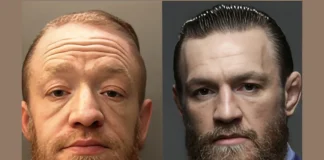
December 17, 2025 – In a significant escalation of efforts to combat financial crimes in the digital era, the U.S. Federal Bureau of Investigation (FBI) and Ghana’s Economic and Organised Crime Office (EOCO) have collaborated on high-profile cases targeting social media influencers suspected of involvement in money laundering and fraud.
A notable recent case involves Ghanaian influencer Frederick Kumi, known as “Abu Trica,” who was arrested on December 11, 2025, in a joint operation. He faces U.S. charges of conspiracy to commit wire fraud and money laundering related to romance scams that defrauded elderly victims of over $8 million. U.S. Department of Justice announcement. This highlights how lavish lifestyles displayed on social media can sometimes mask illicit activities, prompting authorities to scrutinize unexplained wealth.
The motivation behind these investigations stems from the rapid growth of the influencer economy, where sudden affluence can raise red flags for potential links to crimes like romance scams, Ponzi schemes, or laundering proceeds from cyber fraud. Law enforcement uses advanced data analytics to compare reported earnings with displayed lifestyles, tracing cross-border transactions in collaboration with international partners.
The global influencer marketing industry has experienced significant growth, with a projected value of approximately $32.55 billion in 2025, up from $24 billion in 2024 (Influencer Marketing Hub Benchmark Report). This boom creates opportunities for legitimate success but also vulnerabilities for exploitation.
Top earners demonstrate the potential for massive, legitimate income: 20-year-old OnlyFans creator Sophie Rain reportedly grossed over $82 million in the past year and a half, with net profits exceeding $50 million as of earlier in 2025. Other high-profile creators, such as Cardi B and Iggy Azalea, have also earned tens of millions through platforms like OnlyFans, demonstrating how digital content can transparently generate extraordinary wealth.
However, not all influencer wealth is legitimate. Past cases include Nigerian influencer Ramon “Hushpuppi” Abbas, sentenced to 11 years for laundering funds from cyber fraud (RUSI Commentary), and Turkish influencers arrested in 2023 for alleged money laundering through fake invoices.
Authorities are deploying sophisticated tools, including AI-driven analytics, to quickly detect suspicious patterns. International cooperation, as seen in the Abu Trica case involving Ghanaian agencies and the FBI, allows tracing of funds across borders.
This crackdown has ripple effects across the influencer community, with many reviewing their financial practices for compliance. Potential charges carry severe penalties, including lengthy imprisonment and hefty fines.
“We are committed to combating transnational cybercrime and ensuring that perpetrators are brought to justice,” an EOCO spokesperson stated following the recent arrest.
— EOCO Statement, December 2025
As probes continue, experts predict stricter regulations and greater emphasis on financial transparency in the influencer space. This shift underscores law enforcement’s adaptation to digital-age crimes, striking a balance between celebrating legitimate success stories and maintaining vigilance against illicit wealth.