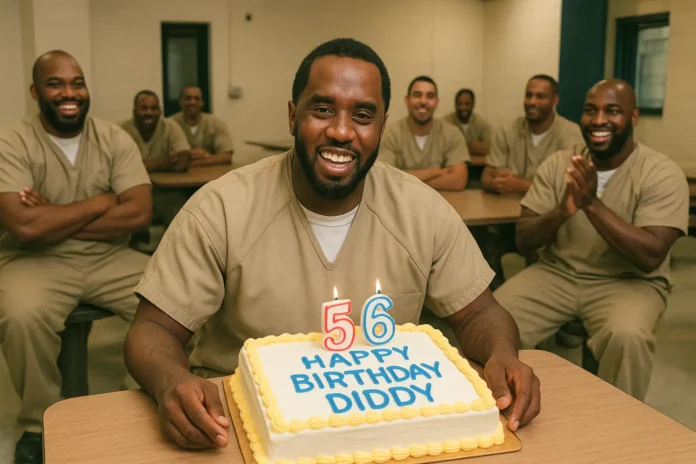
What happens when a hip hop legend trades champagne toasts for a slice of inmate baked cake in the quiet confines of federal prison?
Sean Combs, better known as Diddy, turned 56 on November 4 inside the Federal Correctional Institution at Fort Dix in New Jersey, where a simple gesture from fellow inmates highlighted the human side of life behind bars. This low key milestone comes just weeks into his 50 month sentence for transporting individuals across state lines for prostitution, a conviction handed down after a high profile trial earlier this year.
The days routine at Fort Dix unfolded much like any other for Combs, starting with a standard breakfast of bran flakes or whole wheat bread slathered in jelly and paired with skim milk. Lunch brought options like chicken parmesan over pasta marinara or a chickpea burger with spinach on the side, while dinner featured cheese pizza alongside navy beans and a garden salad topped off with pie for dessert. Yet the real surprise arrived courtesy of his peers, who pooled commissary staples such as flour, sugar, and bits of fruit to whip up a personalized cake, complete with applesauce as a nod to Combs quirky food preferences revealed during his court proceedings. Details on the prison birthday menu underscore the everyday simplicity of the day.
Combs has quickly become a fixture among the roughly 1200 men at this low security facility, thanks in part to his initiative in leading entrepreneurship workshops for inmates. Dubbed Free Game with Diddy, the six week program covers everything from business basics to goal setting and overcoming setbacks, drawing on lessons from his days building Bad Boy Records into a powerhouse label. Inmates have praised the sessions for offering practical tools to rebuild lives post release, and Combs own request to transfer here stemmed from its access to the Residential Drug Abuse Program, a structured path toward sobriety that could shave months off his time served.
These kinds of educational efforts inside prisons deserve more spotlight, as they often pave the way for real second chances in a system rife with recidivism. Studies on similar programs indicate significant reductions in reoffending rates, sometimes up to 50 percent, by blending skill building with community support to foster lasting change. For someone like Combs, whose empire once defined excess, channeling that energy into mentoring could redefine his legacy, turning personal accountability into broader impact.
Family remains a quiet anchor for Combs during this stretch, with his children sharing subtle online tributes that echo support from afar, made easier by the prisons location just a drive from New York. Public chatter on social platforms has swirled with a mix of nostalgia for his White Parties, those star studded soirees in the Hamptons that drew A listers in pristine attire, and fresh curiosity about his prison routine. As Combs eyes a potential release around May 2028, barring good behavior credits, this birthday serves as a pivot point, underscoring how even in confinement, connections and creativity endure.
The story of Combs at Fort Dix reminds us that justice systems thrive not just on punishment but on pathways to redemption, where small acts like sharing a cake can spark bigger transformations. With ongoing appeals in play and his focus on rehabilitation programs, the road ahead holds room for growth amid the scrutiny. In the end, these moments humanize the headlines, inviting us to consider what true celebration looks like when stripped to its essentials.