


Hidden beneath the rolling volcanic landscape of central Turkey lies Derinkuyu, a sprawling subterranean city that continues to astonish archaeologists, tourists, and engineers alike. Carved from soft volcanic rock, the underground settlement is believed to be nearly 2,800 years old and once sheltered up to 20,000 people, their livestock, and supplies — making it one of the most ambitious engineering projects of the ancient world.
Derinkuyu came back into public view only in 1963, when a local man renovating his home knocked down a basement wall and stumbled upon a hidden passageway. According to local lore, the discovery began when his chickens mysteriously vanished through a small crack in the wall. Beyond was a vast labyrinth of chambers, stairwells, and tunnels stretching more than 85 meters below ground.
Archaeologists quickly realized that Derinkuyu was far more than a refuge. With 18 levels — eight currently open to visitors — the complex featured designated spaces for living quarters, food storage, wine cellars, and even a chapel. Ingeniously engineered ventilation shafts and water wells ensured breathable air and clean drinking water, even during extended sieges.
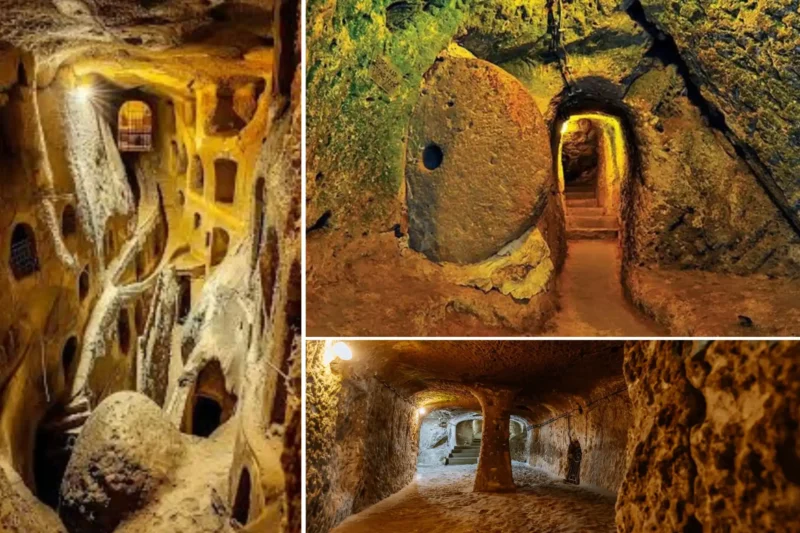
Defense was a priority for its builders. Entrances could be sealed with massive rolling stone doors, some weighing more than half a ton, while narrow tunnels forced intruders to enter single-file, leaving them vulnerable to defenders.
The earliest construction is thought to date back to the Phrygians in the 8th–7th centuries BC. Still, the city expanded significantly during the Byzantine era, when Christian communities carved chapels and left inscriptions in Greek. Over the centuries, Derinkuyu provided sanctuary from Arab raids, Mongol invasions, and Ottoman persecution. Remarkably, the underground refuge remained in use as late as 1909.
The city was ultimately abandoned in 1923 following the population exchange between Greece and Turkey. Knowledge of its existence faded, only resurfacing with its rediscovery in the mid-20th century.
Today, Derinkuyu is a major tourist attraction and part of the UNESCO-listed Göreme National Park and Rock Sites of Cappadocia. Open daily from 8:00 a.m. to 5:00 p.m., admission costs about €13 for international visitors. While only around 10 percent of the site is accessible, the claustrophobic tunnels, stone doors, and soaring ventilation shafts still offer a breathtaking glimpse into ancient survival strategies.
Derinkuyu is the largest of more than 200 known underground cities in Cappadocia. Nearby Kaymaklı, for example, could house about 3,000 people — impressive in its own right, but overshadowed by Derinkuyu’s scale. Scholars believe many of these underground cities were linked by extensive tunnel systems, creating a regional defense network.
For researchers, Derinkuyu represents a rare fusion of necessity, community planning, and technological brilliance. Its intricate infrastructure and capacity for extended habitation suggest an engineering sophistication far ahead of its time.
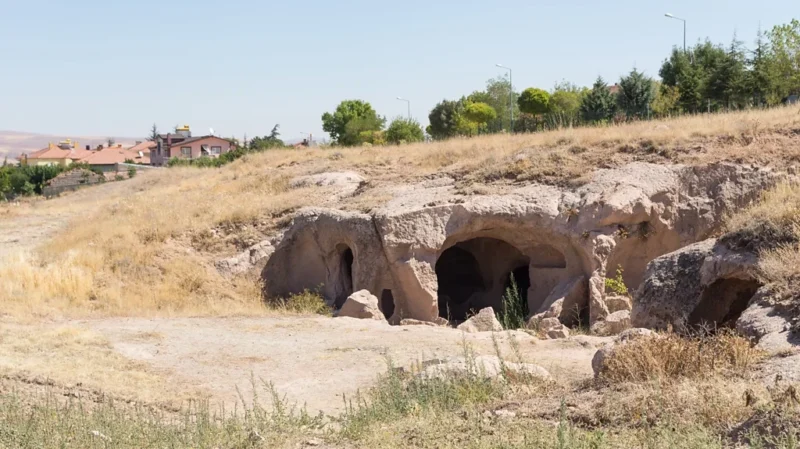
Ongoing excavations may reveal even deeper levels, with some experts suggesting the city could reach 90 meters below ground. Until then, Derinkuyu remains both a marvel of human resilience and a reminder of how far ancient societies were willing to go — quite literally underground — to ensure their survival.
