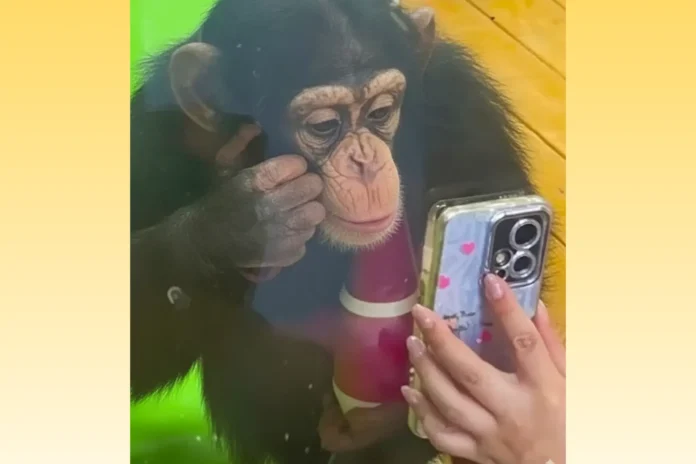
A baby chimpanzee glued to phone screens has prompted a Chinese zoo to take bold action. Shanghai Wildlife Park in eastern China has banned visitors from showing viral videos to a two-year-old chimp named Ding Ding, citing serious risks to its health. The young primate’s obsession with short clips, fueled by crowds eager to see its reactions, has raised concerns about anxiety, vision damage, and unnatural behavior. Ding Ding, a star on China’s social media platform Douyin, first captured hearts with its adorable antics, like sipping milk cross-legged and nibbling lotus petals.
But its fascination with phone screens, playing everything from funny clips to dramatic shorts, turned viral fame into a problem. Visitors flocked to the zoo, pressing phones against the enclosure’s glass to entertain the chimp, who would stare for hours, scratching its face or leaning closer. The trend exploded in early September 2025, with videos racking millions of views. Zoo officials stepped in after noticing Ding Ding’s fixation was more than quirky.
Experts warned that prolonged screen exposure could harm the chimp’s eyesight, as it cannot wear corrective lenses like humans. Blurred vision might also disrupt its ability to communicate, leading to stress or agitation. A bilingual sign now stands by the enclosure, showing a chimp staring at a phone with a red “NO” stamp and a clear message: stop showing Ding Ding videos.
Staff enforce the rule with verbal reminders, though no penalties exist for violations. The decision reflects growing worries about how viral trends affect animals in captivity. Similar cases, like a Chinese zoo dressing a chimp in clothes or a Thai zoo overwhelmed by crowds for a baby hippo, highlight the risks of treating animals as social media props. Studies on zoo animal welfare show that unnatural interactions, like exposure to bright screens, can cause stress and behavioral issues in primates.
Public response has been mostly supportive. On social media, fans of Ding Ding praise the zoo’s move, with some joking about the chimp needing a “digital detox.” Others point to broader issues with keeping intelligent animals like chimpanzees in enclosures. The ban has reduced crowds at Ding Ding’s exhibit, and early reports suggest the chimp is less irritable without the constant screen time. This chimp video ban serves as a reminder of humans’ responsibility when interacting with wildlife, especially in the age of viral videos.