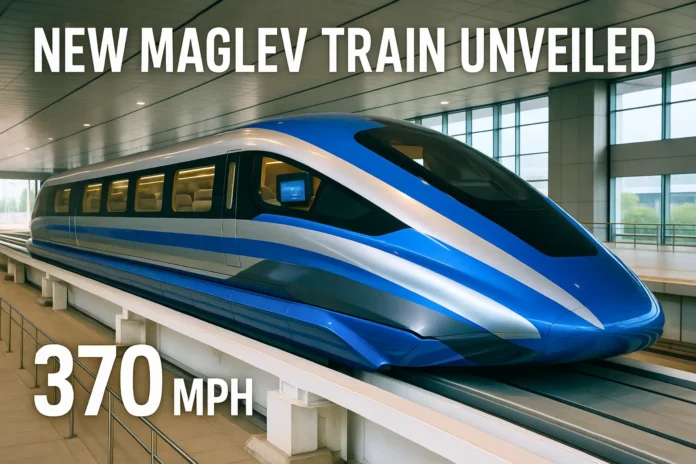
Clocking in at a mind-blowing 370mph (600km/h), this magnetic levitation (maglev) train is a game-changer, poised to redefine how we zip between cities. Fresh off its grand unveiling, this high-tech marvel promises to cut travel times, shrink carbon footprints, and deliver a ride that feels straight out of a sci-fi flick. Here’s the scoop on why this train is stealing the spotlight.
Built by China’s top engineers at the Aerospace Science and Industry Corporation and China Railway Rolling Stock Corporation, this maglev train uses superconducting magnets to float 10 centimeters above the tracks. No friction means it can hit speeds up to 623km/h in tests, with ambitions to push past 1,000km/h in the future. That’s not just fast—it’s faster than many regional jets, making it a serious contender for short-haul travel.
Step aboard, and you’re in for a treat. The interior screams luxury, with sleek carbon fiber walls, personal entertainment tablets for every passenger, and wireless charging pads to keep your devices juiced. Comfy, adjustable seats and massive digital screens showing real-time trip stats add to the vibe. Best of all? It’s fully automated, with no driver needed—just an attendant keeping an eye on the high-tech controls. With room for hundreds across multiple carriages, it’s built to move crowds in style.
Slated to roll out by late 2025, this speed demon could slash the 1,200-kilometer Beijing-Shanghai commute from 5.5 hours to a mere 2.5 hours. That’s a lifesaver for business travelers and city-hoppers. Plus, it’s a win for the planet, potentially cutting carbon emissions by 3-4% by replacing short flights, according to recent studies. It’s the kind of innovation that makes you wonder why we’re still boarding planes for quick trips.
A post from X.
But it’s not all clear skies. The price tag for the vacuum tube tracks is steep, costing up to five times more than standard high-speed rail. The energy needed to keep this beast levitating is no small feat either, and some experts argue the extra speed might not justify the cost for less busy routes. Still, China’s all-in, with plans to link megacities like Beijing and Shanghai in just 90 minutes, setting the stage for a transportation revolution.
This train leaves others in the dust. Shanghai’s current maglev tops out at 460km/h, while Japan’s SCMaglev, which hit 603km/h in tests, won’t hit the rails until 2030. France’s TGV? A respectable 320km/h in regular service. China’s new ultra-fast train isn’t just breaking records—it’s rewriting the rulebook.
As a journalist, I can’t help but feel the buzz around this story. It’s not just about speed; it’s about China betting big on a future where trains outshine planes.