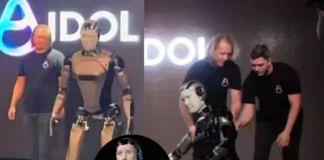
A robot that never has someone plug it in or flip the battery. It senses it’s running low, gets up and goes into a charge-up facility, swaps the power pack itself in under three minutes, and gets back to work without batting an eyelash or needing a helping hand. That’s the Walker S2, which was unveiled during the China International Supply Chain Expo in Shenzhen on July 17, 2025, by the UBTech Robotics. It is the world’s first autonomous battery-changing humanoid robot. This might transform the operation of the warehousing and the factories as the robots work day and night with little supervision.
UBTech Robotics was begun by Zhou Jian in 2012 and was listed on the Hong Kong Stock Exchange in 2023. It was one of the pioneers in robotics. Known for its consumer-friendly Alpha S robots and the industrial Walker S1, which has already boosted sorting efficiency by 120% and cut storage time by 40% in electric vehicle (EV) factories like BYD and Lynk & Co, UBTech is now pushing boundaries with the Walker S2.
“This is a game-changer for industrial automation,”
says Zhou Jian, UBTech’s CEO.
“The Walker S2’s ability to manage its own power supply means factories can run non-stop, cutting labor costs and boosting efficiency.”
The Walker S2’s magic lies in its dual hot-swappable battery system. Equipped with two onboard batteries, the robot uses smart sensors to detect low power or overheating. When needed, it navigates to a docking station, removes the depleted battery, and installs a fresh one in about three minutes all without shutting down.
“It’s like a pit stop in a race,”
explains Michael Tam, UBTech’s chief brand officer.
“The robot decides whether to swap or recharge based on its tasks, ensuring no downtime.”
This seamless process, powered by UBTech’s BrainNet AI system and a 5G partnership with Huawei, allows the robot to coordinate with others in real-time, making it ideal for dynamic factory environments.
Already, the Walker S2 is making waves in trials at major Chinese EV manufacturers like BYD, Zeekr, and Nio. Its predecessor, the Walker S1, proved its worth by slashing labor costs by up to 65% in pilot factories. UBTech claims the S2 could reduce maintenance costs by as much as 78%, thanks to its self-sustaining design.
“Factories need humanoid robots to solve manpower shortages,”
Tam notes. With over 500 units of the Walker S series ordered by companies like Foxconn and Geely, UBTech is scaling up production, aiming for 1,000 units by year-end.
Still, the rise of such autonomous robots sparks questions. While no controversies surround the Walker S2, the broader trend of automation raises concerns about job displacement in manufacturing. China’s government, keen on leading the global AI and robotics race, backs UBTech’s efforts, with a Moody’s report noting the country’s edge in combining advanced AI with low-cost manufacturing.
Chinese company UBTech Robotics has unveiled a humanoid robot capable of changing its own batteries
— Dexerto (@Dexerto) July 19, 2025
The Walker S2 uses a dual "hot-swapping" system to eliminate the need for human assistance pic.twitter.com/6bjMHLZoQA
Looking ahead, the Walker S2 could pave the way for robots that work tirelessly not just in factories but eventually in homes. As UBTech plans to deploy thousands more units globally, this battery-swapping bot might just be the first step toward a world where machines manage themselves, leaving humans to focus on bigger ideas or maybe just a coffee break.