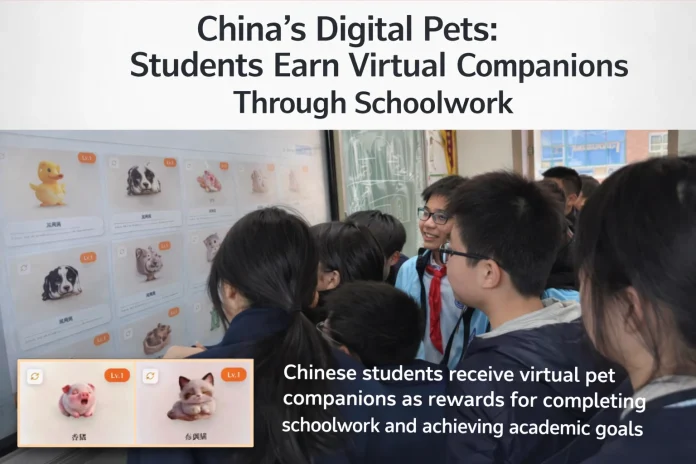
In a novel approach blending technology, gamification, and old-school responsibility, teachers in China are introducing virtual pet-raising programs in primary and secondary classrooms — turning homework, class participation, and good behavior into digital caregiving duties.
The initiative, which first drew widespread attention in March 2026 from schools in Hangzhou, Zhejiang province, has since spread to regions including Jiangxi and Jilin through teacher networks, WeChat groups, and local media buzz. It’s not a centralized Ministry of Education policy but a grassroots experiment led by individual class teachers (known as banzhuren) looking for fresher ways to engage students in the country’s high-pressure academic environment.
At Hangzhou Shenglan Middle School, teacher Liu Qianqian introduced the system to her class of 34–35 students at the start of the semester. Each child adopts a virtual pet via a simple free online platform — options range from cute cats, dogs, and pandas to more imaginative creatures like dolphins, whales, hatching dinosaurs, robot turtles, or even alien-like characters reminiscent of Pokémon or Garfield.
The pets begin as eggs or babies and evolve through multiple growth stages, up to eight levels in some versions. But they only thrive if students earn points through real-life efforts. Points can be spent on virtual food, toys, accessories, or upgrades, making the pet grow bigger, happier, and more advanced. Neglect causes the pet to appear hungry or sad — and in extreme cases, it can regress — adding an emotional layer without any actual consequences.
“It feels more therapeutic and interactive than just handing out points for snacks at the end of the term,” Liu told local reports. Students now reportedly rush to complete homework, help classmates, clean the classroom, or recite lessons fluently, all to keep their digital companions thriving.
The point system rewards a mix of academics and character-building actions: completing homework on time (+1 to +2 points), active participation in class (+1 to +5, or higher for standout contributions), helping others (+2), classroom cleaning (+2), honesty (such as returning lost items), or strong test performance. Deductions apply for tardiness, missed assignments, or phone use during lessons to maintain balance. Some classes feature leaderboards or shared pet galleries for light competition, while fully leveled pets can unlock small real-world perks like badges or minor classroom privileges.

Another teacher, Xia Qin, working with a class of 47 students, observed significant changes, including one boy whose Chinese scores had been in the single digits now consistently turning in homework to “feed” his pet. In Jilin, students were said to be queuing enthusiastically to recite material just to rack up points.
The program builds on China’s familiarity with gamified education and the enduring appeal of virtual pets, echoing the 1990s Tamagotchi craze but repurposed for productive habits. Teachers describe it as an upgrade from traditional积分制 (point systems), where rewards were delayed and material (snacks or small prizes). Here, the feedback is immediate, visual, and tied to nurturing something personal.
Early feedback from educators and parents has been largely positive, with reports of higher homework completion rates, increased classroom engagement, and students showing more excitement around routine chores. It taps into kids’ natural love for animals and games while promoting responsibility, helpfulness, and honesty in a lighter way amid intense academic demands.
Of course, it’s not without potential hiccups. Critics note the slight increase in screen time (though usage remains minimal and school-tied), the risk of over-competition if not managed carefully, and the importance of fair point allocation by teachers. The system remains far from universal, continuing to spread organically through teacher communities rather than formal mandate.
This pet-raising trend reflects broader experiments in Chinese classrooms to make learning feel less obligatory and more rewarding. Whether it catches on further or inspires adaptations elsewhere remains to be seen — but for now, a generation of students is discovering that doing their best in school can also mean taking care of a virtual friend.