What if your home security camera could share footage with police without a warrant?
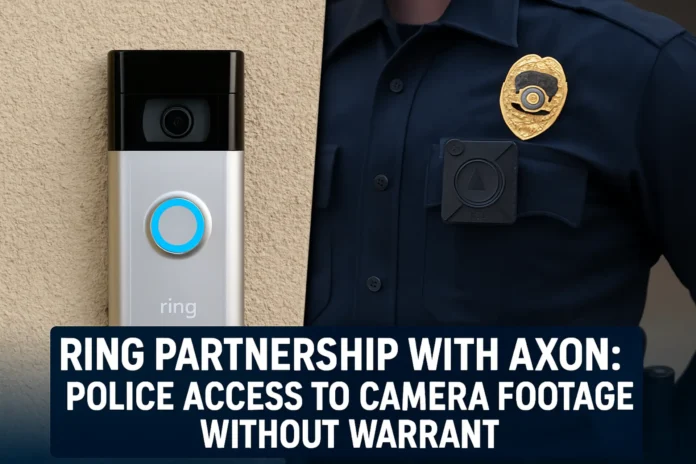
That’s the reality unfolding as Amazon’s Ring Camera teams up with Axon, the company behind police body cameras, to restore law enforcement’s access to doorbell footage. Announced in April 2025, this controversial partnership has reignited debates over privacy, surveillance, and the role of private tech in public safety. As covered in our previous reporting, this partnership echoes concerns regarding the use of surveillance footage in investigations. The new system allows police to request video recordings from Ring devices through Axon’s digital evidence management platform, specifically its Community Request tool.
Unlike the pre-2024 setup, where police could contact users directly via the Neighbors app, requests now flow through a secure, encrypted system. Users must consent to share their footage, and if they decline, law enforcement isn’t notified. This change aims to balance user control with streamlined crime-fighting efforts, but it’s raising red flags for privacy advocates.
Ring’s decision comes under the leadership of its original founder, Jamie Siminoff, who returned in 2025 to steer the company back to its crime-prevention roots. Siminoff believes closer collaboration with police aligns with Ring’s mission to enhance community safety. The partnership also introduces new features, like the ability for users to livestream footage to law enforcement with consent, integrating Ring devices into Axon’s real-time public safety ecosystem.
Similar to Ring’s expansion into drone technology, this partnership has generated significant interest and scrutiny from consumer advocates. However, the move has sparked fierce criticism. Privacy watchdogs argue that allowing police to request footage without a warrant, even with user consent, risks normalizing mass surveillance in neighborhoods.
Ring’s troubled history doesn’t help. In 2023, the company paid a $5.8 million fine to the Federal Trade Commission for improperly sharing user footage, including instances where employees accessed videos without permission. Past collaborations with police, which involved sharing footage without warrants in emergencies, also drew backlash for enabling unchecked surveillance.
These concerns echo the debate surrounding the accountability of private companies, as seen in the recent coverage of dog-related incidents. Civil rights groups worry the partnership could amplify these issues, especially with Ring’s push toward AI and facial recognition technologies. Critics point out that such tools could perpetuate biases, disproportionately affecting marginalized communities.
For example, past reports highlighted Ring footage being used to monitor protests or track individuals for immigration and abortion-related investigations. These concerns fuel fears that the new system, despite its safeguards, could erode consumer trust. Axon and Ring defend the partnership, emphasizing user choice and transparency. Axon’s platform ensures footage is encrypted, and agencies must follow auditable retention policies. The companies claim this setup empowers users while helping solve crimes faster. Yet, the debate persists: does the convenience of fighting crime outweigh the potential for abuse?