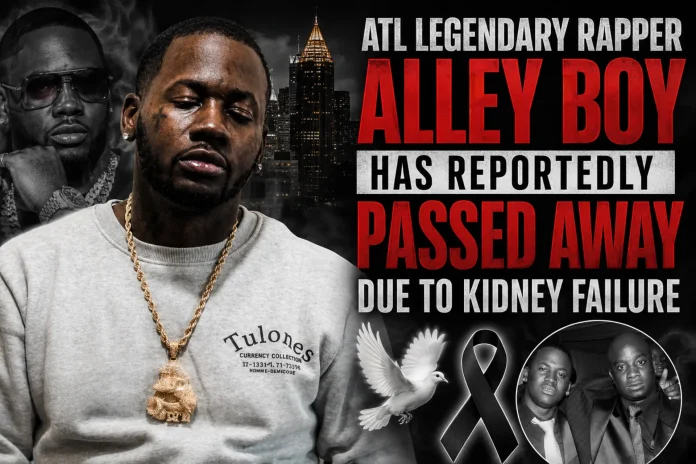
Atlanta rapper Alley Boy, born Curt Freeman on March 3, 1981, in Atlanta’s East Atlanta neighborhoods, has reportedly died at age 45 after complications from kidney failure. Reports of the passing began circulating on July 18, 2026, and quickly spread through social media and the Atlanta hip hop community where he was a respected underground figure.
Freeman grew up in the Edgewood Courts area. He began rapping as a child around age 8 or 9 and drew early inspiration from artists like LL Cool J. His path included street involvement during his youth which led to periods of incarceration, experiences that later shaped the direct lyricism in much of his music. He co-founded and served as co-chief executive officer of Duct Tape Entertainment, an independent label focused on authentic Southern rap.
His career spanned nearly two decades with a focus on independent releases and ownership of his masters. Freeman released influential mixtapes including the Definition of Fuck Shit series, which launched his rise in 2010 and ran to at least three installments, and The Gift of Discernment. These projects showcased his ability to blend street narratives with personal reflection. He collaborated with a range of artists including Gucci Mane, Jeezy, Future, Meek Mill, and Yo Gotti. His most recent official single “Down by Law,” produced by Nard and B, arrived in March 2025 on streaming platforms. His discography is cataloged on Discogs while his lyrics are tracked on Genius.
Freeman had been transparent about his health struggles in interviews conducted in late 2024 and early 2025. He explained that years of codeine consumption combined with high blood pressure led to kidney damage. He underwent regular dialysis treatments three times per week and was listed for a potential transplant. In those conversations he noted that he did not adjust his diet and daily habits quickly enough after the initial diagnosis, which allowed the condition to progress despite medical care.
Public information on his immediate family remains limited though he referenced community ties and personal losses including a cousin in past conversations and music. His professional success centered on building an independent career and maintaining control over his creative output rather than pursuing major label deals long term.
The reported passing has drawn tributes from Atlanta rap artists and fans who highlighted his authenticity and influence on the local underground scene. While details continue to emerge, the focus remains on honoring the body of work he created. Freeman’s openness about addiction and chronic health issues offered a rare perspective in hip hop and may encourage greater awareness around these topics. For context on kidney disease and dialysis resources, visit the National Kidney Foundation.
Freeman’s legacy rests on consistent output and a willingness to address difficult realities. His music documented life in Atlanta with directness and resilience. As the community processes this loss, his catalog serves as a lasting record of the perspective he brought to Southern hip hop.