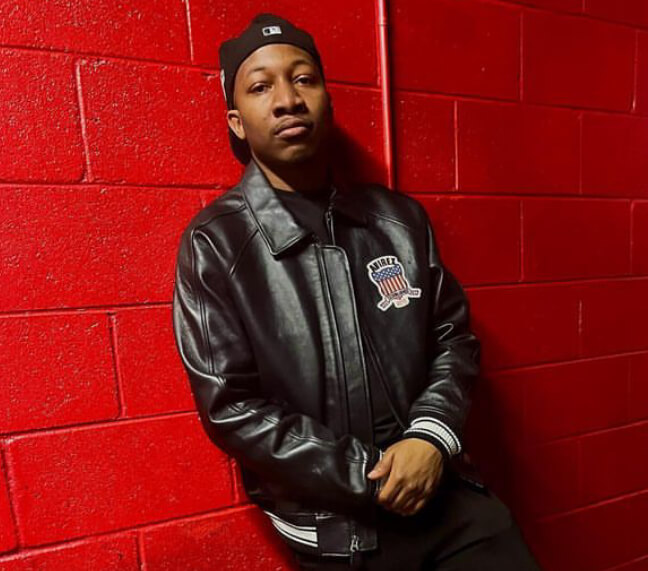
At his St. Louis bedroom in the early 2000s, teenage Leland Tyler Wayne hunched over a computer, creating beats in FL Studio. His mother, Leslie Joanne Wayne, saw more than a hobby—she saw a spark. Every weekend, she’d pack the car and drive her son 17 hours round-trip to Atlanta, a grueling journey fueled by faith in his talent. These trips, often hinging on Leland’s good grades, laid the foundation for Metro Boomin, now a hip-hop titan with a $45 million empire.
Leland, born in 1993, was 13 when he started producing, initially dreaming of rapping before finding his groove behind the boards. Leslie, a single mother after divorcing Leland’s father, became his biggest champion. The Atlanta drives began in 10th grade, connecting Leland with artists he’d met online, like OJ da Juiceman. By 11th grade, Atlanta felt like home.
“She’d make sure I was straight with school,”
Metro later recalled,
“but she believed in this.”
After high school, he enrolled at Morehouse College but dropped out after one semester, as studio sessions with Future and Gucci Mane outgrew his class schedule.
Metro’s teens were a whirlwind of hustle. He was already creating beats for Future, Gucci Mane, and Young Thug at 19, his dark, atmospheric sound forever linked with trap beats. His big breaks included smashes on Drake and Future’s “Jumpman” (2015), Migos’ “Bad and Boujee” (2016), and Future’s “Mask Off” (2017). His go-to producer’s mantra—
“If Young Metro don’t trust you, I’m gonna shoot you”
—rolled out on radios, an endorsement.
His favorite producer mantra—“If Young Metro don’t trust you, I’m gon’ shoot you”—rang out on radios, a seal of approval. Metro did not only make beats—he made anthems, with 16 of his beats going top-10 on the Billboard Hot 100 and Grammy nominations.
His ambitions went beyond the studio. Metro began his label, Boominati Worldwide, in 2017 with Universal Music Group, developing young talent while maintaining his brand. Both his solo efforts, Not All Heroes Wear Capes (2018) and Heroes & Villains (2022), reached number one on the Billboard 200. He and Future released two number-one collaborative albums in 2024 with him, along with Future, that included the Kendrick Lamar-featuring “Like That” that drove a viral rap beef. In 2023, Metro sold part of his catalog for $70 million, solidifying his $45 million net worth, augmented by Nike endorsements and a $4.9 million California residence.
In June 2022, tragedy struck. Leslie was killed in a domestic violence incident, a loss that shattered Metro.
“She was my biggest supporter,”
he said, dedicating Heroes & Villains to her memory. Channeling grief into purpose, he launched “Single Moms Are Superheroes” with the Steve & Marjorie Harvey Foundation, offering grants and resources to single mothers. In 2024, he expanded the initiative with $20,000 grants during his We Trust You tour, honoring Leslie’s sacrifices.
Metro has transformed what it means to be a producer. Once behind-the-scenes, he’s now a headliner, performing at Lollapalooza and Egypt’s Great Pyramids. His moody beats, inspired by horror soundscapes, have shaped modern hip-hop. Yet challenges persist. A sexual assault lawsuit in 2024, stemming from an incident in 2016, is still in its course, and Metro has yet to say anything publicly. His involvement in the 2024 feud between Drake and Kendrick Lamar, through “Like That” and the internet-breaking “BBL Drizzy,” created backlash but grew his power.