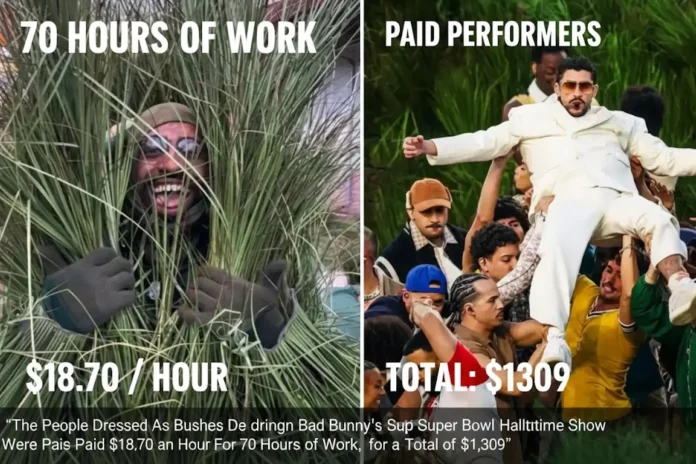
Hundreds of background performers dressed as bushes and sugar cane plants for Bad Bunny’s Super Bowl LX halftime show earned a gross total of $1,309 each, while the headliner himself received no direct performance fee from the NFL. These supporting artists worked at $18.70 per hour across approximately 70 hours, covering eight rehearsal days and the February 8, 2026, performance at Levi’s Stadium in Santa Clara, California. The stark contrast highlights the long-standing tradition where superstar acts trade massive paychecks for unparalleled global exposure, leaving the conversation buzzing about fairness in high-profile entertainment.
The innovative stage design transformed the field into a living Puerto Rican landscape, with over 500 performers in elaborate green and brown costumes embodying tall sugar cane stalks, thick bushes, and flowing grasses. They held precise positions, often standing still or swaying gently to the beat, creating an immersive, breathing forest that Bad Bunny navigated while delivering hits atop vehicles and through the foliage. This element tied directly to his cultural roots, symbolizing Puerto Rico’s agricultural heritage and adding a surreal, vibrant layer to the production’s tropical theme.
Bad Bunny, born Benito Antonio Martínez Ocasio, made history as the first solo Latin artist to headline the halftime show, produced in partnership with Roc Nation and Apple Music. His set drew over 130 million viewers, featuring energetic choreography, guest appearances, and pyrotechnics amid the plant formations that brought his vision of island pride to life. While the background crew received hourly wages aligned with regional standards, Bad Bunny followed the established NFL practice of forgoing a traditional fee, instead gaining a career-elevating platform that typically boosts streaming numbers and tour demand exponentially.
Online discussions quickly turned to the pay disparity, with some viewing the supporting performers’ compensation as modest given the physical rigor and prestige, potentially dropping lower after taxes. Others pointed out the resume value and argued the hourly rate reflects fair local labor terms. For the star, the zero-dollar fee is standard, as past headliners have similarly relied on indirect benefits rather than direct payment.
This setup underscores a broader dynamic in spectacle-driven events, where the spotlight rewards the few immensely while hundreds contribute essential creativity for more grounded wages. The plant concept proved memorable and culturally meaningful, yet it also prompts reflection on how value is distributed behind the scenes. Catch the full halftime spectacle on the official NFL YouTube channel or explore production insights via Apple Music’s Super Bowl coverage.