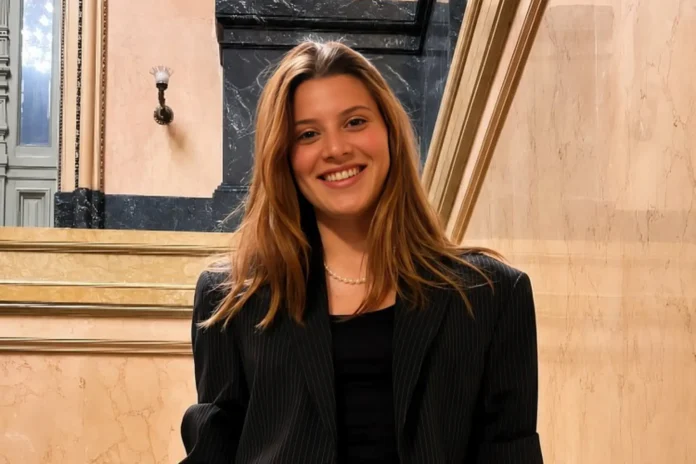
The following claim that’s quickly going viral on social media networks is that an injectable gel that can help the heart mend itself after sustaining injury due to a heart attack has been developed by 25-year-old Argentine biologist Pilar Ferrer. So, is this a legitimate breakthrough in medicine or just another viral piece of news which requires some clarification?
Pilar Ferrer is a registered biologist and a PhD student of the Favaloro University in Buenos Aires. Pilar leads this research through Amnova Biotech that she started in 2024. The injectable gel under consideration is an injectable cell-free hydrogel based on the placenta amniotic membrane. In addition, the placenta amniotic membrane is well-known for its healing properties and used in other types of regenerative therapies. Once administered into damaged cardiac tissues, it provides a scaffold for cardiac cells growth.
In preclinical trials on sheep, whose heart is structurally similar to the human one, the drug decreased the size of infarct and improved the heart pump function in 28 days. Ferrer has described the results clearly:
“Lo hemos probado en ovejas, que tienen el modelo cardíaco más similar al humano. Pudimos ver que el hidrogel activa los mecanismos necesarios para regenerar el tejido y que hubo un aumento tanto en la formación de nuevos vasos sanguíneos como en la proliferación de células cardíacas.”
She has also noted that the project grew from her doctoral thesis and a partnership with Argentina’s amniotic membrane tissue bank.
Heart attacks result in the death of heart muscle tissue. A healthy adult human heart has very limited regenerative capacity, and it replaces dead myocardial cells with non-contractile connective tissue, leading to the formation of scars. Such scars impede the heart’s ability to pump blood and cause heart failure. The fact that cardiovascular diseases are the leading cause of death worldwide makes finding new treatments even more critical. Current treatment options are limited to restoring the blood supply to the affected tissue and managing the patient’s symptoms. A reliable method to regenerate tissue in the adult heart remains to be developed.
A human clinical trial is expected to start in approximately 2028, and if it confirms the preliminary promising results, it will take several more years for an FDA review and scalability. Moreover, most treatments that show excellent results in preclinical trials on large animal models fail in humans.
Thus, this study is an exciting step toward developing regenerative medicine treatments for heart diseases. However, these results are far from being definitive, and many steps must be taken before such therapy can become available to regular patients. People interested in this research should follow reputable scientific journals and clinical trial registries.