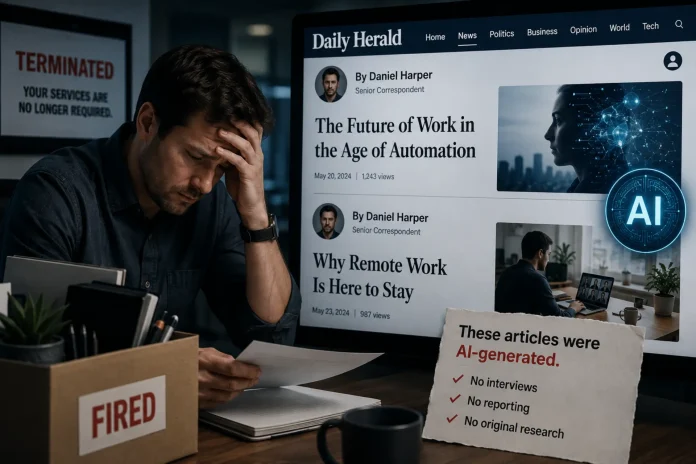
Ben Touati, a 48-year-old freelance journalist living in Stockholm, learned in late May 2026 that artificial intelligence generated articles had continued to appear under his byline on a company-owned website after his contract with ClickOut Media ended in March. He described the discovery as a slap in the face because the five pieces carried technical signs of automated production and ran in early morning hours without any input from him. The events unfolded entirely online across digital publishing platforms managed from the United Kingdom with operational ties reported in Malta while Touati worked remotely from Sweden.
Touati started with the firm then known as Finixio in January 2024, writing about technology and related subjects for Techopedia before managers moved him to the German language version of Esports Insider. Company access was cut on March 9 and his formal employment concluded around March 23 after managers pointed to lower freelance demand and earlier search engine penalties on several properties. On May 26 he checked the site and found the unauthorized articles still live. He filed a data protection claim on June 2, which prompted removal of his name from those pieces, though later reports noted additional casino-focused content briefly reappearing under the same byline on a revived version of the site.
ClickOut Media has stated that it employs artificial intelligence assisted content alongside human review and continues refining its systems. The firm acquires established digital brands and shifts them toward high-volume affiliate material often tied to casino topics. Public filings available through the UK company registry show substantial 2024 revenue for the organization, which maintains a presence at the ClickOut Media official site. Touati has since started his own project visible at Popkulturist. Principles covering personal data appear in official European data protection resources.
Artificial intelligence tools now generate text at speeds and volumes that frequently exceed what individual human writers can match, especially in routine or formula-driven content. This gap appears across many sectors where machines handle first drafts, research summaries, and pattern-based reporting far faster than traditional methods allow. Details compiled for this account drew in part from artificial intelligence-assisted research that helped organize public timelines, filings, and statements into coherent sequences. Humans retain decisive advantages in judgment, ethical framing, original insight, and accountability that pure automation has not yet replicated.
Adaptation requires writers and publishers to treat artificial intelligence as a support layer rather than a full replacement, focusing energy on verification, context, and creative direction that machines still struggle to supply. Professionals who master oversight of automated systems while protecting personal bylines and standards stand positioned to guide the next phase of digital media. Clear contracts, consent rules, and transparent labeling of generated material will help ensure technology expands human capacity instead of eroding the trust readers place in named authors. The episode involving Touati shows both the risks of unchecked speed and the practical steps available when individuals assert control over their professional identities.