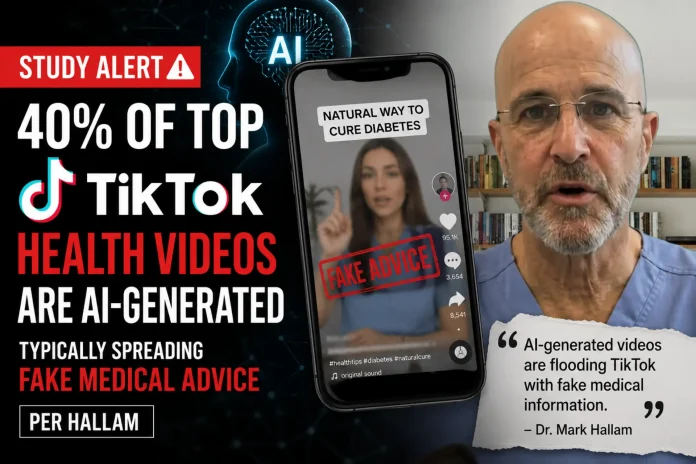
A new analysis from the digital marketing agency Hallam shows that 40% of leading health-related videos on TikTok feature AI-generated content that typically spreads false medical advice to millions of viewers. The findings confirm a measurable and widespread problem rather than an isolated trend, with top examples of this material averaging 2.5 million views each and AI-assisted clips being shared more frequently than human-created ones. This volume of exposure creates a real pathway for unvetted claims to influence personal health decisions at scale.
Hallam reviewed 1,198 publicly available videos that ranked in the top results for 25 search terms covering health, finance, education, careers, and public information. Researchers used a fresh TikTok account to reduce personalization bias, then manually checked every clip for signs of AI generation or assistance, such as synthetic voices, visual artifacts, repetitive scripts, and AI-produced music. In the overall health category, the rate reached 40%. Searches for health tips returned AI content in 84% of the top results, while doctor advice, fitness, nutrition, and mental health tips also showed substantial shares. Full methodology and breakdowns are available in the Hallam research report, and the broader industry trend is examined in The Guardian’s coverage of the misleading AI-doctor accounts.
Many of the AI-driven videos promote claims that established medical bodies have rejected. These include assertions that microwaving food in plastic, using deodorants, or sleeping next to a phone causes cancer. Cancer Research UK states that mobile phones do not increase cancer risk, and similar evidence undercuts the other listed myths. Other clips recommend unproven remedies, such as Coca-Cola mixed with onion for pain, or a product called Hyalethinap Plus Pro Max that supposedly boosts natural anti-ageing molecules. No independent record of that product exists. The polished delivery and confident tone of the synthetic presenters make the advice appear more authoritative than it is.
The scale of this content is particularly concerning because a meaningful share of the public already turns to social platforms for health guidance. Polling has shown roughly one in five people use social media for health information, and more than one in five social media users report making actual health decisions based on what they encounter there. Clinicians describe a growing number of patients who arrive worried, confused, or having already tried unproven approaches after viewing short-form videos. While detailed public case studies of severe physical injury directly tied to these specific AI-doctor clips remain limited, the pattern of delayed care, unnecessary anxiety, and potential self-treatment carries clear risk. Alex Ruani, a health misinformation researcher at University College London, described the volume of exposure as a frightening amount of fake medical content and an industrialised exploitation of trust.
Leaders from the British Medical Association and NHS England have called the trend a huge danger to public safety and a real threat to public health. They note that platforms must strengthen efforts to limit dangerous fake advice, or the public may pay with their wellbeing. TikTok has removed flagged examples and states that it removes harmful health misinformation, including AI-generated material, while partnering with the World Health Organization and the NHS. The company also invests in AI literacy resources and labeling tools. Even so, the continued prominence of synthetic-doctor accounts in high-volume searches shows that current safeguards have not fully contained the problem.
The data-backed reality is that AI-generated health content now occupies a substantial portion of the most visible TikTok results on topics that matter for everyday decisions. When confident synthetic voices outrank careful human expertise, the potential for misguided actions rises. Clearer in-video labeling of AI material, stricter standards for health claims, and stronger digital literacy remain essential, so that users treat short-form advice as a starting point only and verify important information through qualified medical sources before acting. Earlier reporting has traced how AI-generated material has fooled audiences at scale in other contexts, while the rise of AI influencers on major platforms has compounded the broader trust problem. For context on the public’s growing reliance on these platforms, more than 200 million people now show signs of problematic social media use.